Language


Views: 298 Author: Yinda Powder Coating Publish Time: 2026-09-28 Origin: Site


Content Menu
● How the suppliers were selected
>> 1. Yinda Technology — Regional custom-formulation partner
>> 2. Cornel Polymer — Architectural-grade Thai powder manufacturer
>> 3. AkzoNobel / Interpon — Structured multi-market supply
>> 4. Jotun Powder Coatings (Thailand) — Local technical presence
>> 5. Rich Powder Coatings — Custom colours and smaller projects
>> 6. ARTRUS — Architectural coating applicator
>> 7. Thai Fountain of Life — Coated parts for appliance and automotive programmes
● Capacity, MOQ, and qualification snapshot
● Buyer's guide: from sample to contract
>> How can I check whether a supplier's ISO certificate has expired?
>> Does a QUALICOAT-approved powder mean my finished aluminium parts are approved?
>> How do I compare two quotes with different powder prices?
>> What if the sample passes, but later batches fail adhesion or weathering tests?
>> Should I buy powder locally or source it from a regional manufacturer?
Thailand offers powder coating buyers more than a convenient delivery location. Its automotive, appliance, electronics, and architectural supply chains create sustained demand for consistent finishes and dependable technical support. The Eastern Economic Corridor, spanning Chachoengsao, Chon Buri, and Rayong, adds a concentrated base of manufacturers and logistics facilities. Thailand's Board of Investment reported more than US$4.1 billion in approved electric-vehicle supply-chain investment across 198 projects in July 2026—an indicator of future demand for coated components, not a measure of powder coating output.
A purchasing team should nevertheless distinguish between three businesses that are often presented together: a powder manufacturer formulates and produces the coating; a distributor supplies powder made elsewhere; and a coating applicator finishes the buyer's metal parts. This guide includes all three where they solve a relevant procurement problem, but identifies each company's role. It also includes Yinda Technology as a regional alternative: Yinda is headquartered in China, not a verified Thailand-based powder factory.
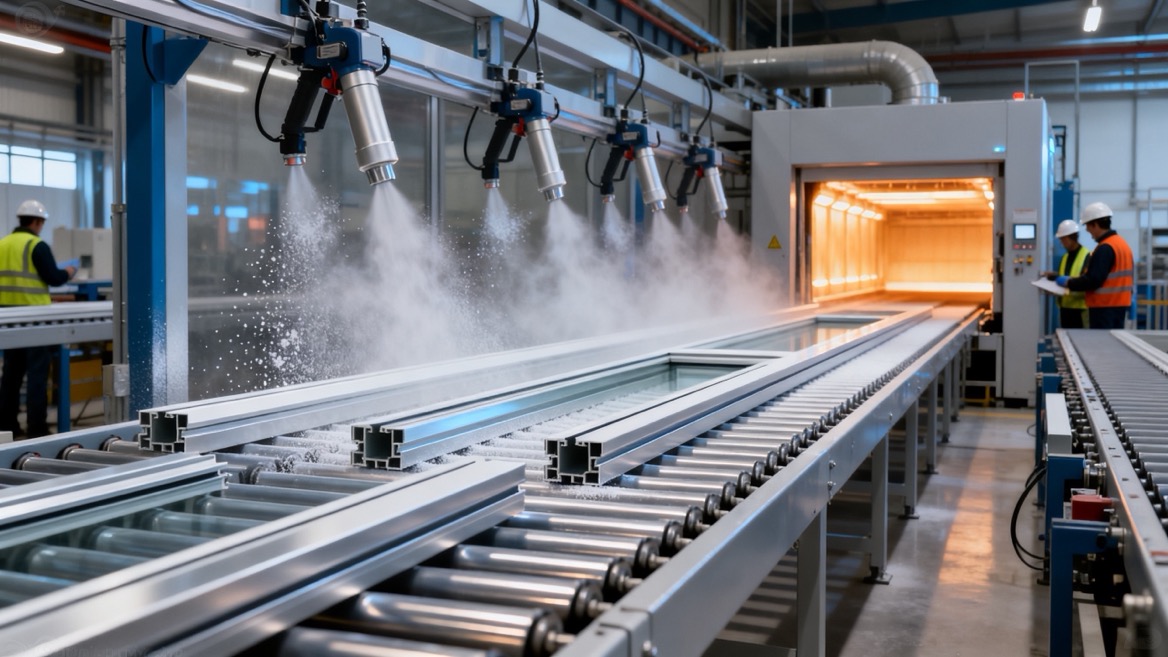
A company belongs on a serious shortlist only when a buyer can identify what it actually supplies and find a credible starting point for verification. The selection below considers:
- Manufacturing role and location: Whether the company makes powder, supplies it, or applies it to parts—and where the relevant operation sits.
- Technical capability: Published evidence of formulation, colour matching, application support, pretreatment, or testing.
- Quality controls: Documented quality systems or product approvals, with the understanding that a website claim is not proof of current certification.
- Commercial fit: Suitability for repeat high-volume orders, custom colours, smaller projects, or finished-component sourcing.
- Evidence limits: Whether founding year, output, minimum order quantity (MOQ), and approvals can be established publicly.
This is a buyer-oriented shortlist, not a verified ranking by Thai production volume. No factory audit, quotation, current certificate check, or independent production trial was performed for this article. "Not published" in the comparison table means buyers must request evidence; it does not mean the company lacks the capability.
Industry forecasts also need careful reading. An August 2026 MarketsandMarkets report estimates Thailand's powder coatings market at US$314.8 million in 2026 and projects US$428 million by 2031. Those are market estimates, not audited sales or capacity figures for the suppliers below.
Established: 2010. Base: Foshan, China. Relevant markets: China and international customers, including Southeast Asia and the Middle East. Role: Powder coating manufacturer and regional supply option; Thai manufacturing has not been verified.
Yinda Technology develops and manufactures powder coatings and environmentally oriented materials. Its published company profile describes an R&D centre, testing facilities, production lines, and applications spanning architectural profiles, doors and windows, new-energy vehicles, medical equipment, hardware, and appliances. The profile identifies a Foshan headquarters and an Indonesian subsidiary, while describing its Middle East presence more broadly. Buyers requiring supply specifically from Thailand should ask Yinda to identify the producing legal entity and plant on the quotation.
For a small or mid-sized brand, Yinda is worth assessing when a standard catalogue colour is insufficient. Its relevant value proposition is custom formulation and direct technical discussion: define the substrate, colour reference, gloss, texture, cure window, and end-use conditions with the supplier before committing to a production batch. Its regional presence may help communication and supply coordination, but buyers should confirm the actual dispatch point, lead time, MOQ, and OEM/private-label terms in writing. No public plant-specific capacity or MOQ figure was verified for this guide.
Established: 2001. Base: Bangpoo Industrial Estate, Samut Prakan, Thailand. Relevant markets: Thai industrial and architectural customers; any additional export destinations should be confirmed. Role: Powder coating manufacturer.
Cornel offers one of the clearest publicly documented technical portfolios on this shortlist. It describes architectural and industrial powders, including fluoropolymer coatings positioned for AAMA 2605 applications, antimicrobial finishes, metallic effects, low-cure products, and heat/light-reflective coatings. Its stated process covers R&D, incoming-material checks, production controls, temperature-controlled storage, and delivery.
For specification-led buyers, Cornel reports ISO 9001 certification and QUALICOAT approval P-1569. It also offers colour matching from customer requirements and RAL shades. These are useful reasons to request a proposal, not substitutes for checking the current certificate, approved coating-system entry, and exact product being offered. The company does not publish a comparable annual powder-output figure or a standard MOQ on the reviewed page.
Established: A Thai powder-coating operation was strengthened by AkzoNobel's acquisition of V.Powdertech in 2017; the acquired Thai business's founding year was not established in the reviewed sources. Base: Thai powder-manufacturing assets included a plant in Samut Sakhon. Relevant markets: Thailand and Southeast Asia. Role: Powder coating manufacturer.
AkzoNobel reported that V.Powdertech supplied powder coatings for domestic appliances, furniture, and general industrial applications. The acquisition included manufacturing assets and expanded AkzoNobel's regional powder-coating business. Its Interpon portfolio gives buyers a starting point for projects requiring a defined product family and structured technical documentation.
This option is most relevant when an appliance or industrial programme needs repeatable specifications across orders or sites. Do not assume every Interpon product is manufactured in Thailand, however. Ask the sales team for the exact manufacturing plant, product data sheet, relevant approval, production origin, and process for managing formulation changes. Thailand-specific powder capacity and MOQ were not publicly established for this comparison.
Established: The founding year of the specific Thai powder-coatings entity was not verified in the reviewed primary sources. Base: Amata Nakorn Industrial Estate, Chon Buri, Thailand. Relevant markets: Thai industrial customers and regional projects, subject to confirmation for the quoted product. Role: Powder coating supplier with a named Thai powder-coatings entity.
Jotun lists Jotun Powder Coatings (Thailand) Ltd. at its Chon Buri industrial-estate address. Its Thai site describes powder-coating applications for appliances, furniture, and automotive components. For buyers operating finishing lines in Thailand, that local point of contact may be useful when discussing colour standards, application behaviour, or replenishment.
The published contact information does not, by itself, establish the output capacity or manufacturing origin of each powder offered. Before treating an offer as locally made, request the plant address for the quoted SKU, its technical data sheet, recent batch documentation, lead time, and MOQ. Buyers seeking an OEM or private-label arrangement should establish whether that service is available for the specific project rather than infer it from the company's general product range.
Established: A precise founding year was not verified from the reviewed company information; the company states more than ten years of powder-coating experience. Base: Thailand. Relevant markets: Thai companies, including small and medium-sized businesses. Role: Powder coating manufacturer.
Rich Powder describes in-house production of indoor and outdoor powders and custom matching from physical samples or RAL references. Its site advertises small-lot manufacturing and a promotional 100 kg minimum, compared with a stated usual minimum of 300 kg. It also advertises production in approximately 7–14 days. Both figures are offer-specific claims, not guaranteed terms for every chemistry, colour, or delivery date; request a current written quotation.
Rich Powder is a practical candidate for trial programmes, replacement colours, or customers whose annual volume does not justify a large initial run. For repeat supply, ask how the factory retains the approved master sample, identifies each formula revision, and prevents colour drift between small batches. Its reviewed public material did not establish an independently verified annual capacity or current third-party management-system certificate.
Established: 2011; coating production began in 2012. Base: Thailand. Relevant markets: Architectural and industrial finishing projects. Role: Applicator and supplier of powder-coated aluminium products, not a verified powder-formulation manufacturer.
ARTRUS is relevant when the purchase is for coated profiles or fabricated parts, rather than bags of powder. It describes pretreatment capability, four separate coating lines, aluminium profiles, and window and door accessories. It states ISO 9001:2015 certification and refers to approvals from powder-coating brands; buyers should verify the current scope and any applicator approval required by their project.
Its published typical coating lead time is seven working days, but that should be checked against part dimensions, quantity, pretreatment, colour-change scheduling, and inspection requirements. Ask for a quotation that separates substrate supply, pretreatment, coating, rework allowance, and packing. That makes it possible to compare ARTRUS fairly with a powder-only supplier plus a separate applicator.
Established: 2002. Base: Chon Buri, Thailand. Relevant markets: Appliance and automotive customers in Thailand and export supply chains. Role: Metal-parts manufacturer and coating applicator, not a powder-resin supplier.
Thai Fountain of Life combines stamping, coating, and assembly. Its site lists Samsung, LG, and automotive-sector customers, and publishes a combined powder-and-liquid coating capacity of 15,000 pieces per day across four coating lines. That figure must not be represented as powder-only capacity: the mix, part size, line availability, and usable throughput need confirmation for each programme.
The company publishes ISO 9001, ISO 14001, ISO 45001, and IATF 16949 claims, with stated scopes that differ by system. It may suit buyers sourcing completed brackets, housings, or appliance components with an integrated finish. Its OEM strength is part manufacturing and assembly; it should not be approached as though it sells custom-formulated powder. Verify each certificate's current status and whether the quoted process falls within its scope.
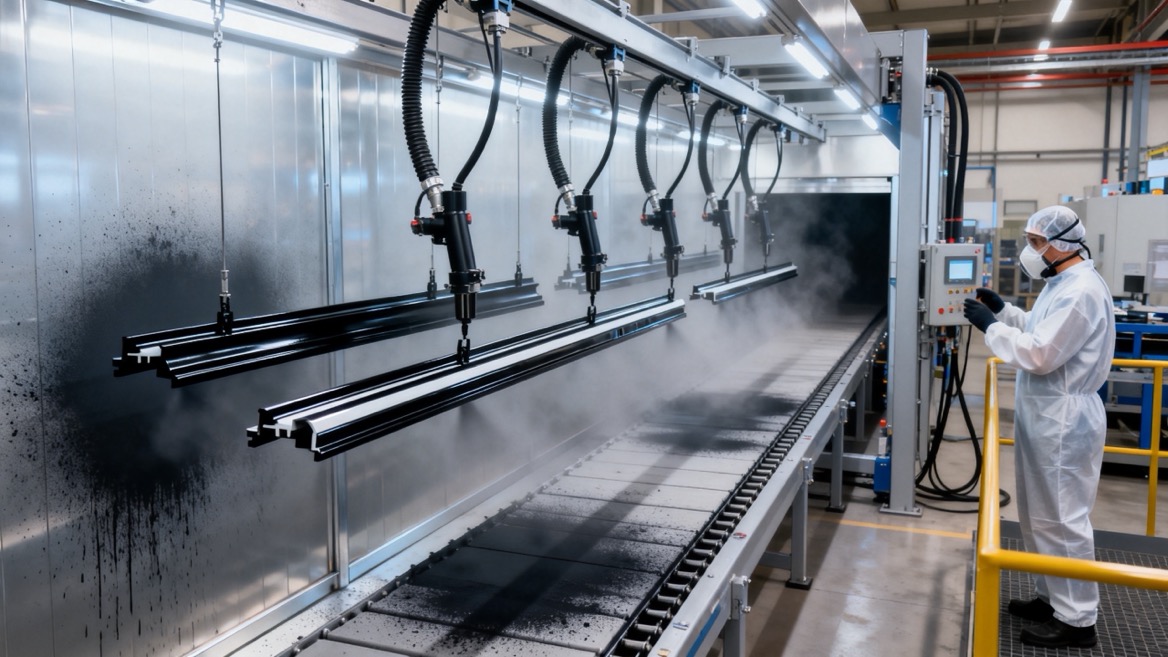
The table separates published information from information to request. Output in kilograms, output in finished pieces, and the number of application lines are different measures and cannot be compared as though they were equivalent.
| Supplier | What the buyer receives | Published capacity signal | Published MOQ | Published qualification or compliance signal |
|---|---|---|---|---|
| Yinda Technology | Powder; custom-development discussion | Production lines stated; numerical output not published | Not published | R&D and testing facilities stated; request current plant-specific certificates and test reports |
| Cornel Polymer | Manufactured powder | Numerical output not published | Not published | ISO 9001 and QUALICOAT P-1569 stated; verify current scope and approved system |
| AkzoNobel / Interpon | Powder coating systems | Thai manufacturing asset documented; numerical output not published | Not published | Request current product- and site-specific approvals |
| Jotun Powder Coatings (Thailand) | Powder-coating supply | Thai powder-coatings entity listed; numerical output not verified | Not published | Request current product and site documentation |
| Rich Powder Coatings | Manufactured and custom-colour powder | Numerical output not published | 100 kg promotional offer stated; usual 300 kg stated | Request current certificate and batch-test evidence |
| ARTRUS | Coating service; coated aluminium products | Four coating lines stated | Project-dependent; not published | ISO 9001:2015 and coating-brand approval claims; verify current scope |
| Thai Fountain of Life | Manufactured, coated, assembled metal parts | 15,000 pieces/day for powder and liquid combined | Project-dependent; not published | ISO 9001, ISO 14001, ISO 45001, and IATF 16949 claims; verify scope |
Supplier descriptions and the figures in this table come from the companies' published materials and AkzoNobel's acquisition disclosure. They have not been independently audited for this guide.
Start with the application, not the supplier's colour card. For exterior aluminium, ask what performance specification applies to the *complete coated system* and which powder formulation is approved. A reference to AAMA 2603, 2604, or 2605 should lead to a product-specific discussion, not an assumption that every powder in a supplier's range meets the same level. For electrical equipment sold into the EU, RoHS concerns restricted substances in covered electrical and electronic equipment; a powder is not simply "CE certified." The finished product's manufacturer remains responsible for applicable conformity documentation and marking.
For steel, aluminium, EV components, or medical-equipment housings, put these details in the request for quotation:
1. Part and environment: Substrate alloy or steel grade, geometry, welds, expected exposure, cleaning chemicals, and intended service life.
2. Coating specification: Resin system, colour master, gloss range, texture, dry-film-thickness range, cure schedule, and agreed test methods.
3. Process conditions: Pretreatment chemistry, permitted rework, actual part-metal temperature, and whether production powder may be reclaimed.
4. Supply terms: Manufacturing site, MOQ by colour and formula, production slot, shelf-life conditions, batch traceability, and change-notification procedure.
5. Acceptance plan: Who tests the first article, which panels or production parts are tested, sampling frequency, and the remedy if a shipment fails.
The most expensive shortcut is approving a perfect laboratory panel and assuming production will match it. A supplier can change a resin or pigment package without an obvious day-one colour difference; an applicator can use a different pretreatment or cure a heavier part for too little time. To reduce that risk, approve a controlled sample package: one signed master panel, a representative production part, the agreed formula or product code, a recorded cure profile, and a retained sample from the first commercial lot. Test the coating on the intended substrate and pretreatment—not only on a convenient laboratory panel.
An overlooked purchasing check is the reclaim-powder rule. Recovering overspray may be economical, but the proportion of reclaimed powder, contamination from prior colours, and separation of metallic or textured finishes can alter appearance and application behaviour. Ask the applicator to state the permitted virgin-to-reclaim practice for your product and record it in the trial. For a critical finish, compare a production-run part with the signed master under agreed lighting before releasing the full batch. This is a process-control recommendation, not an allegation about any supplier on this list.
Do not accept an impressive salt-spray-hour figure without the test conditions, substrate, pretreatment, coating thickness, scribe method, and pass criterion. ASTM states that salt-spray results used alone have seldom correlated reliably with natural-environment performance. Use the test as one agreed comparison within a wider qualification plan, not as a stand-alone service-life guarantee.
Finally, establish who imports what. A Thai applicator buying imported powder is not the same supply arrangement as buying powder manufactured in Thailand. If origin or local-content rules matter, request evidence for the exact shipment and confirm the relevant customs classification with a qualified broker. Thai Customs publishes searchable import/export statistical data, but broad trade categories should not be presented as powder-coating-only export totals without validating the code and product description.
Thailand's powder-coating supply base gives buyers several workable routes: Cornel and Rich Powder for locally manufactured powder; AkzoNobel and Jotun for established coating portfolios with Thai operations or presence; and ARTRUS or Thai Fountain of Life when the requirement is a finished coated component. Yinda Technology offers an additional regional conversation for buyers prioritising custom powder development, particularly smaller or mid-sized programmes, but should be identified honestly as a Foshan-headquartered manufacturer rather than a Thai factory.
For a project in Thailand, send the same substrate details, performance requirements, forecast volume, and sample-approval plan to two or three appropriate candidates. If custom formulation and responsive OEM discussion are priorities, include Yinda Technology in that technical enquiry and ask it to specify the proposed manufacturing site, MOQ, lead time, and test package. Select the partner whose production evidence matches the approved finish—not simply the lowest opening quotation.
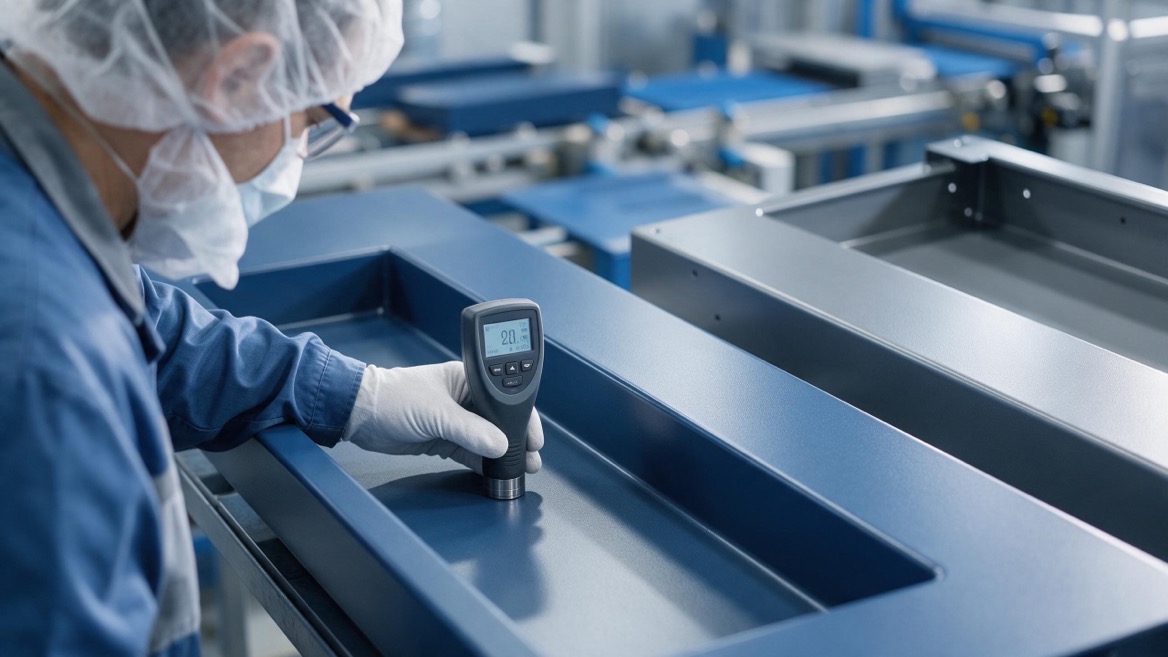
Ask for the complete certificate, including legal entity, site address, standard, scope, certificate number, issuer, and validity dates. Search the number or company in IAF CertSearch, then confirm that the status is active and that the covered activity matches the proposed manufacturing or coating work. If a record cannot be found, contact the issuing certification body directly; do not treat a PDF image or a group-company certificate as proof for a different plant.
Not automatically. QUALICOAT maintains information on approved coating systems and separately lists licensed coaters. Check the proposed powder's specific approval and the applicator's licence, then verify that the pretreatment, application, and inspection arrangements match the project specification. A manufacturer's general approval claim does not validate every colour, formulation, or finishing line.
Compare cost per accepted coated part, not price per kilogram alone. Request matched trial data on coverage, required film thickness, transfer efficiency, reclaim practice, cure energy, rejects, and rework. A cheaper bag may cost more after additional powder use or rejected components; conversely, a higher-priced architectural system may be unnecessary for an indoor part.
Preserve the approved sample, production-lot samples, labels, test records, and oven logs. Confirm first that the later parts used the same substrate and pretreatment. Then compare the powder product code and batch, measured film thickness, actual metal-temperature profile, and any reclaim or rework. Write these variables and the agreed dispute-testing method into the purchase contract before scale-up.
Choose based on your failure risk and operating model. A locally accessible supplier or applicator may simplify trials and urgent replenishment; a regional manufacturer may offer a useful custom formulation or commercial fit. Compare both against the same specification, approved sample, delivered cost, documented manufacturing origin, and credible replenishment plan. Do not equate a local sales office with local production.
- [Thailand Board of Investment — July 2026 EV supply-chain investment press release]. [boi.go]
- [Eastern Economic Corridor Office — Special Economic Promotion Zones]. [eeco.or]
- [MarketsandMarkets — Thailand Powder Coatings Market, published August 2026]. [marketsandmarkets]
- [Thai Customs — Statistical Data]. [customs.go]
- [Yinda Technology — About Us]. [yinda-global]
- [Cornel Polymer — About and Product Capabilities]. [cornelpolymer]
- [AkzoNobel — 2017 Results and V.Powdertech Acquisition]. [akzonobel]
- [Jotun Thailand — Contact and Locations]. [jotun]
- [Rich Powder Coatings — Company and Custom-Order Information]. [richpowder]
- [ARTRUS — Coating Services]. [artrus.co]
- [Thai Fountain of Life — Manufacturing Capabilities]. [thaifountain.co]
- [QUALICOAT — Approved Coating Systems] and [Licensed Coaters]. [qualicoat]
- [IAF CertSearch — Certificate Verification]. [iafcertsearch]
- [European Union — RoHS Directive 2011/65/EU]. [eur-lex.europa]


