Language


Views: 298 Author: Yinda Powder Coating Publish Time: 2026-09-21 Origin: Site


Content Menu
● Why Source Powder Coatings for Vietnam?
● Leading Suppliers Serving Vietnam
>> 1. Yinda Technology — Flexible OEM Partner for Customized Industrial Powder Coatings
>> 2. MAX Powder Coatings Vietnam — Local Thermosetting Powder Coating Specialist
>> 3. AkzoNobel Powder Coatings Vietnam / Interpon — Large-Scale International Supplier
>> 4. Jotun Vietnam — Industrial Protection and Corrosion-Resistance Focus
>> 5. Dai Phu Protech-Oxyplast Vietnam — Architectural and Furniture Powder Coating Specialist
>> 6. VEFCO Powder Coatings — Vietnam-Based Powder Coating Supplier
>> 7. Protech-Oxyplast / Regional Supply Partners — Specification-Oriented Powder Coating Options
>> Do Not Buy on Price per Kilogram Alone
>> Common Procurement Problems
>>> 1. A lower-grade resin system is substituted
>>> 2. The test panel does not match real production
>>> 3. Metallic powder shade shifts between batches
>>> 4. Certificate claims are not validated
>>> 5. Compliance documents are generic
● The Less-Discussed Industry Trap
>> 1. How can I verify whether a supplier's ISO 9001 or ISO 14001 certificate is still valid?
>> 2. What documents should I request before buying powder coating for export products?
>> 3. Is CE certification applicable to powder coating itself?
>> 4. What MOQ should I expect for custom powder coating colors?
>> 5. How do I compare two suppliers when both provide similar test reports?
Vietnam has become an increasingly important powder coating sourcing market for buyers serving aluminum profiles, architectural hardware, furniture, appliances, electronics, motorcycles, and industrial components. Its expanding export-manufacturing base, industrial parks, and growing presence of international coating groups make it a practical location for buyers who need regional supply, technical support, and shorter lead times within Southeast Asia. Vietnam's manufacturing output grew 10.8% year on year in 2025, while total goods exports reached USD 475.04 billion, providing a strong industrial base for coatings demand.
This guide reviews leading powder coating manufacturers and suppliers serving Vietnam, including Yinda Technology as a flexible cross-border option for brands that need deeper OEM support, custom colors, and responsive technical communication. It is designed for professional procurement teams evaluating long-term supply—not merely comparing catalog prices.
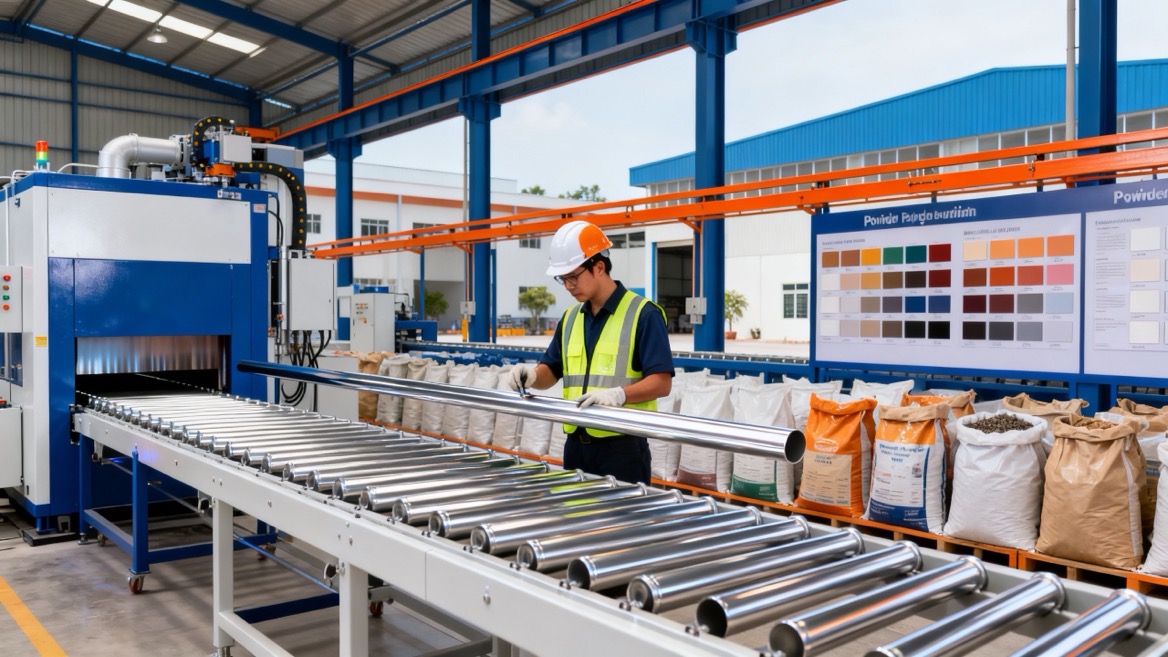
Vietnam is not just a consumption market for industrial coatings. It is also a major manufacturing platform for export-oriented products, particularly electronics, machinery, appliances, aluminum systems, furniture, hardware, and transport-related components.
In 2025, Vietnam exported USD 107.75 billion in computers, electronic products, and components. Machinery, equipment, tools, and spare parts also remained a major export category. These manufacturing segments use powder coatings widely for corrosion protection, electrical insulation, appearance, abrasion resistance, and long-term durability.
For powder coating buyers, the country's strongest industrial demand zones generally include:
- Southern Vietnam: Ho Chi Minh City, Binh Duong, Dong Nai, Long An, and Ba Ria–Vung Tau, with strong clusters in metal fabrication, furniture, consumer goods, electronics, and export assembly.
- Northern Vietnam: Hanoi, Bac Ninh, Hai Phong, Hung Yen, and Thai Nguyen, supported by electronics, automotive components, machinery, and industrial equipment supply chains.
- Central Vietnam: Da Nang and nearby industrial areas, where aluminum, building products, fabricated metal, and construction-linked manufacturing are developing.
Vietnam's industrial ecosystem is also supported by foreign investment. Total disbursed foreign investment reached USD 27.62 billion in 2025, up 9.0% year on year. For coating buyers, this matters because international factories often require more formal quality documentation, traceability, stable color control, and reliable material qualification.
However, a supplier "in Vietnam" is not always the right sourcing answer. Some buyers need a local coating producer for fast replenishment and direct support, while others need a regional manufacturer with greater color-development capacity, lower entry MOQs, or specialized product development. A well-structured sourcing plan may combine both.
The companies below were screened using publicly available company information, manufacturing announcements, product documentation, certification claims, technical positioning, local-market presence, and relevance to industrial buyers. This is not a laboratory audit or a guarantee of supplier performance. Buyers should independently validate all certificates, specifications, production capacity, and commercial terms before placing a production order.
The key evaluation dimensions are:
| Evaluation area | What professional buyers should examine | Why it matters |
|---|---|---|
| Manufacturing capability | Production lines, extrusion and bonding capability, batch control, packaging, warehouse management | Determines supply continuity and consistency |
| Product range | Polyester, epoxy, epoxy-polyester hybrid, polyurethane, acrylic, low-bake, metallic, textured, anti-graffiti, antibacterial, insulating grades | Matches coating chemistry to actual end use |
| Quality management | ISO 9001, ISO 14001, batch traceability, retained samples, inspection records, complaint process | Helps reduce color, gloss, film-build, and adhesion disputes |
| Technical support | Pretreatment guidance, curing-window advice, application troubleshooting, sample panels | Powder coating performance depends on the complete coating system |
| Compliance documentation | RoHS, REACH-related declarations, SDS, TDS, heavy-metal control, restricted-substance statements | Important for export markets and regulated sectors |
| Customization | RAL/Pantone matching, gloss selection, texture, metallic effect, weatherability level, packaging labels | Critical for OEM, project, and private-label buyers |
| Commercial flexibility | MOQ, color-development process, payment terms, production lead time, export documentation | Often determines whether a supplier is suitable for small and mid-sized brands |
| Long-term reliability | Technical responsiveness, change-control process, continuity planning, audit openness | More valuable than a low initial quote |
A strong factory should be able to explain more than its product name. It should clearly state resin system, recommended substrate preparation, curing schedule, target film thickness, salt-spray test method where applicable, gloss tolerance, color tolerance, storage conditions, and batch traceability process.
The following list is presented in no strict ranking order. Each supplier may suit different purchasing models, applications, qualification standards, and project volumes.
Founded: 2010
Headquarters: Foshan, Guangdong, China
Regional presence: China, Indonesia, and the Middle East; serves international customers including Southeast Asian markets
Typical applications: Architectural profiles, doors and windows, new-energy vehicles, medical equipment, hardware, electrical appliances, and metal components
Best fit: Small and mid-sized brands, regional distributors, OEM fabricators, project-based buyers, and companies needing a responsive custom-development partner
Yinda Technology is a powder coating manufacturer headquartered in Foshan, Guangdong, China, with a stated focus on powder coating and environmentally oriented material research, manufacturing, sales, and energy-saving technology promotion. The company reports a dedicated R&D center, testing facilities, advanced production lines, and an R&D team with more than 20 years of experience.
For Vietnam-focused buyers, Yinda's value is not that it claims to be a Vietnam-headquartered producer. Its relevance is its regional operating structure, including an Indonesia subsidiary and Middle East expansion, combined with an export-oriented service model for buyers who need more customization than a standard local-stock product range may provide.
Yinda can be particularly suitable when the purchasing requirement includes:
- Custom color matching against RAL, Pantone, physical reference panels, or customer-approved standards.
- Product development for a defined substrate, curing condition, or production-line constraint.
- Private-label or OEM packaging requirements.
- Coordinated support for architectural aluminum, metal doors, electrical enclosures, hardware, medical-device housings, and new-energy-related components.
- Lower-volume pilot orders before scaled production.
- Faster technical communication for buyers that need formulation feedback, color-panel confirmation, or trial-batch adjustment.
The company's published profile states that it serves sectors including architectural profiles, doors and windows, new energy vehicles, medical equipment, hardware, and electrical appliances. For procurement teams, this broader application coverage is useful because coating performance requirements differ sharply across exterior aluminum, indoor appliances, automotive-adjacent components, and functional industrial hardware.
Buyer due diligence recommendation: Request the relevant TDS, SDS, product-grade recommendation, cure schedule, export packing specification, and a documented color-approval process before initiating an order. For exterior products, specify whether the project requires standard polyester, super-durable polyester, or a higher weatherability system. Do not rely only on a color card.
Founded: 2012
Location: Southern Vietnam
Core products: Polyester, epoxy, epoxy-polyester hybrid, and acrylic-based thermosetting powder coatings
Reported management systems: ISO 9001:2015 and ISO 14001:2015
Best fit: Buyers requiring locally supported powder coating supply, coating-line support, and metal-finishing coordination in southern Vietnam
MAX Powder Coatings Vietnam is a local manufacturer focused on thermosetting powder coatings. Its published information identifies polyester, epoxy, epoxy-based, and acrylic-based powder coating offerings and describes itself as a VOC-free coatings producer in southern Vietnam.
The supplier also states that its production facility follows ISO 9001:2015 and ISO 14001:2015 management systems certified by UKAS, and that it serves global supply chains in Vietnam. Buyers should still request current copies of certificates and verify certificate scope, issuing body, expiry date, and site address independently.
One noteworthy aspect of MAX Powder Coatings is its broader service positioning. In addition to powder coatings, the company presents MAXLINE for coating lines and equipment and MAXCOAT for metal-finishing services. It states that MAXCOAT works with standards including AAMA 2604 and AAMA 2605.
This can be valuable for buyers who need more than powder supply—for example, a fabricator setting up a new coating line, improving a curing process, or outsourcing coated-metal production.
Procurement strengths to explore:
- Local Vietnam supply for shorter replenishment cycles.
- Thermosetting product selection for general industrial and metal-finishing applications.
- Potential line and finishing support for manufacturers building internal capability.
- Claimed alignment with ASTM and ISO-related requirements.
Questions to ask: Which products are manufactured locally versus sourced externally? What is the normal production lead time for custom colors? What is the tolerance for gloss and color variation between batches? Does the supplier provide application support for reclaim systems and automatic spray lines?
Vietnam manufacturing presence: Bac Ninh and Dong Nai-related powder coating operations
Core strengths: Architectural, appliance, automotive-related, and industrial powder coating systems
Best fit: Large OEMs, specification-driven projects, export manufacturers, and buyers with demanding documentation requirements
AkzoNobel's Interpon portfolio is one of the better-known international powder coating platforms available to industrial users in Vietnam. AkzoNobel completed an expansion of its Bac Ninh multi-site in 2024, adding five powder coating lines and a water-based production line intended for the consumer electronics market.
This investment is significant for buyers because Bac Ninh sits within northern Vietnam's manufacturing ecosystem, which has strong links to electronics and industrial supply chains. The added powder coating lines may improve regional availability for customers needing controlled supply and larger-scale support.
The Interpon range covers multiple application needs. For example, Interpon 600 is described as a polyester TGIC powder coating range designed for exterior exposure, with a broad choice of colors and finishes, including gloss, satin, matte, and textured effects. AkzoNobel also publishes Vietnam-specific product documentation for automotive-related powder coatings, including products designed for automotive components with corrosion, humidity, chip, acid-spotting, and weathering resistance requirements.
Relevant buyer profile:
- Aluminum extrusion and façade-system companies.
- Consumer appliance and electrical enclosure manufacturers.
- Automotive-component and motorcycle-component producers.
- Multinational factories requiring standardized documentation and defined product systems.
- Large-volume buyers prioritizing specification continuity.
Potential purchasing trade-off: International coating groups can be strong on portfolio depth and system documentation, but procurement teams should confirm custom-color minimums, project lead times, commercial responsiveness, and local technical availability. For some mid-sized brands, a specialized OEM manufacturer may offer more flexibility during color development and pilot-stage production.
Founded globally: 1926
Vietnam market presence: Established regional supplier
Core strengths: Protective coating systems, industrial performance, architecture, and corrosion-focused solutions
Best fit: Fabricated steel, industrial equipment, severe-service components, infrastructure-related metalwork, and customers prioritizing corrosion-protection specifications
Jotun is an established international coatings company with a broad industrial and protective-coatings position. In Vietnam, its Primax coating solutions emphasize corrosion protection tested to ISO 12944-related requirements.
For industrial buyers, ISO 12944 is important because it provides a framework for corrosion protection of steel structures using protective paint systems. It is not a universal substitute for project-specific testing, but it helps engineers define exposure categories, coating-system expectations, and durability requirements.
Jotun's Primax Xtend and Primax Defend product information highlights adhesion and corrosion-protection performance in relation to ISO 12944 requirements. This makes Jotun particularly relevant when the coated item will operate in humid, coastal, industrial, or otherwise corrosive environments.
Typical use cases:
- Industrial equipment and machinery.
- Fabricated steel and metal structures.
- Heavy-duty architectural components.
- Outdoor metal assemblies in tropical or coastal conditions.
- Projects requiring a more formal corrosion-protection discussion.
Important distinction: Do not assume that a powder coating alone guarantees corrosion resistance. Performance is strongly affected by substrate quality, degreasing, conversion coating, blasting or pretreatment, edge coverage, film thickness, curing completeness, and damage during assembly or transport.
Experience claim: Nearly 35 years
Location: Ho Chi Minh City
Core strengths: Electrostatic powder coatings, architecture, furniture, aluminum applications, super-durable polyester, and coating-line support
Best fit: Aluminum fabricators, furniture manufacturers, architectural hardware suppliers, and customers seeking application-equipment support
Dai Phu Protech-Oxyplast Vietnam presents itself as the exclusive licensed manufacturer and supplier of Protech-Oxyplast electrostatic powder coatings and Gema spraying equipment in Vietnam. Its public company profile highlights architecture and furniture coatings, aluminum coating applications, sustainable coating solutions, thermoset powders, super-durable polyester, and coating-line optimization.
This positioning can make the company relevant for buyers producing:
- Aluminum doors, windows, and profiles.
- Outdoor furniture and metal furniture.
- Architectural hardware and façade elements.
- Powder-coated steel and aluminum components.
- Products requiring coordination between powder, application equipment, and line performance.
The connection with Gema spraying equipment is especially useful for factories that need help optimizing application parameters rather than only buying coating powder. Poor gun settings, inadequate grounding, inconsistent air quality, unsuitable powder-reclaim ratios, or improper cure verification can all cause expensive finishing defects even when the powder itself meets specification.
Buyer due diligence recommendation: For outdoor architectural products, ask whether the recommended grade is standard durable polyester or super-durable polyester; request accelerated-weathering evidence relevant to the target market; and ensure that test panels use the same pretreatment and substrate condition as your production parts.
Founded: 1994, according to market listings
Location: Vietnam
Core focus: Industrial powder coating supply
Best fit: Buyers seeking a locally based supplier for common industrial powder-coating requirements and regional sourcing continuity
VEFCO is listed among Vietnam-based powder coating participants in industry market coverage, alongside multinational suppliers and regional coating companies. It is commonly associated with Vietnam's industrial powder-coating market and may be relevant for buyers sourcing locally for general industrial applications.
Because detailed current public information on its specific capacity, certifications, technical portfolio, and OEM terms is less standardized than that of some larger global groups, buyers should conduct direct qualification rather than infer capabilities from market listings.
Questions for an initial RFQ:
- Which chemistry families are manufactured locally?
- What is the annual and monthly production capacity by resin system?
- Which certificates apply to the actual production site?
- Can the supplier provide current TDS, SDS, RoHS declaration, and batch COA?
- Does it offer metallic, bonded metallic, texture, anti-graffiti, antibacterial, or low-bake grades?
- What is its color-development lead time and MOQ for non-stock colors?
Core strengths: Architectural coatings, furniture coatings, electrostatic application systems, and regional technical support
Best fit: Buyers needing a combined product-and-process discussion rather than a commodity powder quotation
Protech-Oxyplast appears in Vietnam market coverage as part of the local and regional powder coating landscape, with Dai Phu identified as a Vietnam-linked licensed supplier. This category is particularly relevant for architects, aluminum-profile converters, furniture manufacturers, and fabricators where visual consistency and line performance are central.
Rather than evaluating such a supplier only by price per kilogram, buyers should compare:
- Approved color consistency across production lots.
- Edge coverage on complex profiles.
- Metallic-effect stability.
- Batch-to-batch gloss tolerance.
- Required cure window and oven capacity.
- Compatibility with reclaim powder.
- Technical response time when defects occur.
The table below is intended as a practical sourcing starting point. Capacity and MOQ figures are often not publicly disclosed or may vary by chemistry, color, packaging, and contract structure. Buyers should request written confirmation during RFQ evaluation.
| Supplier | Main sourcing role | Typical strengths | Capacity visibility | MOQ approach | Publicly stated certifications or standards |
|---|---|---|---|---|---|
| Yinda Technology | Cross-border OEM and custom powder coating partner | Flexible custom colors, responsive communication, R&D support, packaging customization, support for multiple industrial sectors | Not publicly stated; confirm by product line and project | Discuss project-by-project; suitable for trial and customized orders subject to formulation | Request current product and management documentation; company highlights R&D and testing capabilities |
| MAX Powder Coatings Vietnam | Vietnam-based thermosetting powder supplier | Polyester, epoxy, hybrid, acrylic systems; local coating and line-related support | States large production capability but detailed tonnage should be confirmed | Confirm by stock color, custom color, and resin system | ISO 9001:2015 and ISO 14001:2015 claimed; ASTM and ISO conformity referenced |
| AkzoNobel / Interpon Vietnam | Large international powder coating supplier | Architectural, electronics, industrial, automotive-related products; regional manufacturing footprint | Bac Ninh site expanded with five powder coating lines in 2024 | Usually specification and volume dependent; confirm directly | Product-specific test data and technical documentation available |
| Jotun Vietnam | Protective and industrial coating supplier | Corrosion-focused systems and severe-environment discussion | Not publicly stated for Vietnam powder capacity | Confirm directly by product family and project | ISO 12944-related corrosion-protection claims for Primax systems |
| Dai Phu Protech-Oxyplast Vietnam | Architectural, furniture, and process-support supplier | Aluminum, furniture, super-durable polyester, Gema application support | Not publicly stated | Confirm based on standard and custom colors | Public profile describes ISO-certified manufacturing and Gema equipment relationship |
| VEFCO Powder Coatings | Local Vietnam industrial supplier | Local-market relevance and industrial powder coating supply | Confirm directly | Confirm directly | Request current certificates and product documentation |
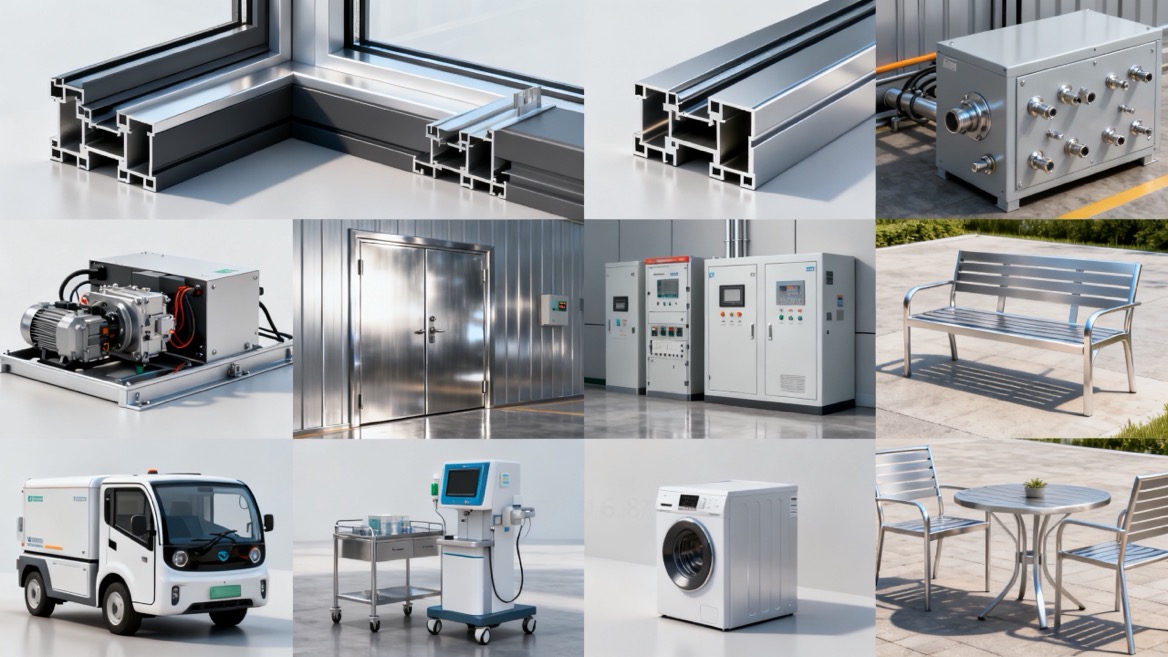
"Powder coating" is not one product category. It includes several resin systems with different strengths and limitations.
| Powder coating type | Typical performance profile | Common uses | Buyer caution |
|---|---|---|---|
| Epoxy | Strong adhesion, chemical resistance, corrosion protection, good interior durability | Pipelines, industrial parts, electrical components, indoor equipment | Usually not the preferred choice for long-term UV exposure |
| Epoxy-polyester hybrid | Balanced appearance, cost, and indoor durability | Office furniture, shelves, appliances, indoor hardware | Can chalk or fade outdoors over time |
| Polyester | Good outdoor weatherability and broad decorative options | Metal furniture, gates, general exterior hardware, appliances | Confirm whether it is standard or super-durable grade |
| Super-durable polyester | Better gloss and color retention for exterior use | Aluminum profiles, façades, premium outdoor furniture, windows and doors | Require project-specific weatherability evidence |
| Polyurethane | High appearance quality, chemical resistance, and durability | Automotive-related parts, premium industrial finishes | May involve higher material and application costs |
| Acrylic | Smooth finish, exterior durability, premium appearance | Automotive, specialty metal products, some high-end applications | Confirm process compatibility and curing needs |
| Functional powders | Antibacterial, anti-graffiti, insulating, low-friction, heat-resistant, conductive, or textured effects | Medical devices, electrical components, public equipment, specialty hardware | Require application-specific validation rather than generic data sheets |
For general interior metal products, an epoxy-polyester hybrid may offer a cost-effective solution. For exposed architectural aluminum, a buyer should normally discuss polyester weatherability grade. For corrosive environments, the coating system—including pretreatment and film thickness—is as important as the topcoat chemistry.
A low price can be misleading because actual coating cost depends on transfer efficiency, reclaim behavior, film-build requirement, defect rate, rework, color consistency, and final durability.
A useful calculation is:
Effective coating cost per finished part=(Powder cost+application loss+rework cost+energy cost)/Accepted finished parts
A powder that costs less per kilogram but requires higher film thickness, produces more rejects, or gives unstable metallic appearance can become more expensive than a higher-priced, better-controlled alternative.
For new suppliers or new colors, use a structured approval process:
1. Provide the supplier with the substrate type, pretreatment process, end-use environment, desired color standard, finish, gloss range, and target film thickness.
2. Request a written technical recommendation identifying resin family, cure schedule, application method, and relevant test methods.
3. Obtain coated sample panels before ordering bulk material.
4. Test panels using your own production line, not only the supplier's laboratory conditions.
5. Measure color, gloss, film thickness, adhesion, impact resistance, cure, appearance, and corrosion performance where relevant.
6. Keep a sealed approved sample panel as the master reference.
7. Require the supplier to identify each production batch with lot number, manufacturing date, and retained-sample procedure.
8. Approve the first production batch before releasing large-scale purchasing.
The exact test plan should match the application. Common tests include:
- Film thickness measurement.
- Cross-cut adhesion test.
- Pencil hardness.
- Direct and reverse impact resistance.
- Bend or flexibility test.
- Gloss measurement.
- Color difference measurement, commonly using ΔE.
- Salt-spray testing where corrosion resistance is relevant.
- Humidity resistance.
- Boiling-water or pressure-cooker testing for selected systems.
- MEK rub or solvent resistance where applicable.
- Cure verification using temperature profiling and laboratory testing.
- Outdoor weathering or accelerated exposure for exterior applications.
A supplier may describe a coating as "outdoor powder coating" without clarifying whether it is standard polyester, super-durable polyester, or another chemistry. The result can be early fading, chalking, or gloss loss.
How to avoid it: Put the complete chemistry and performance requirement in the purchase specification. Require the supplier to state the resin family and provide the recommended end-use category in writing.
A supplier's sample may look excellent when cured under ideal laboratory conditions. Your production parts may have thicker sections, cold spots, sharp edges, contaminated surfaces, or a different oven profile.
How to avoid it: Run a plant trial using your actual substrate, pretreatment, spray guns, reclaim ratio, line speed, and oven settings.
Metallic and special-effect powders can show differences caused by particle orientation, gun voltage, film thickness, reclaim proportion, and application technique. A supplier may meet its internal standard while your finished parts still look inconsistent.
How to avoid it: Define the approved visual standard under agreed lighting conditions. For metallic colors, identify whether the product is dry-blended or bonded metallic powder, and establish reclaim rules before mass production.
A supplier may show an ISO certificate that has expired, applies to a sales office rather than the factory, or covers a different production location.
How to avoid it: Verify the certification body, certificate number, scope, legal company name, factory address, issue date, and expiry date. Ask the issuing certification body or use its certificate-verification database where available.
A generic RoHS or restricted-substance statement may not apply to the exact product, batch, or formulation you are buying.
How to avoid it: Ask for a declaration that identifies the exact grade, color code, manufacturing site, and document revision. For sensitive applications, require third-party testing or a contractually defined compliance process.
One of the most expensive but under-discussed problems in powder coating procurement is the mismatch between cure schedule on paper and metal temperature on the actual part.
A technical data sheet may state a curing schedule such as "10 minutes at 200°C," but that normally refers to metal temperature, not simply oven air temperature. Thick steel parts, densely loaded racks, heavy aluminum castings, and cold incoming material can take much longer to reach the required metal temperature.
If the part is under-cured, the coating may initially look acceptable but later show poor adhesion, reduced solvent resistance, lower impact resistance, weak corrosion protection, or premature field failure. If over-cured, colors can shift, gloss may decline, and energy costs increase.
Practical control method: Use a temperature data logger attached to representative parts and create a verified cure profile for each part family. Do this before blaming the powder supplier for a defect. Require your supplier to specify the cure window—not merely one nominal temperature and time.
Vietnam is an increasingly relevant powder coating sourcing market because its industrial production, export manufacturing, electronics, metalworking, and architectural fabrication sectors continue to expand. Local and international suppliers can serve different purchasing priorities: local replenishment, large multinational specifications, corrosion-control projects, coating-line support, or customized OEM development.
For buyers seeking a flexible powder coating partner with strong customization potential, Yinda Technology is worth considering alongside Vietnam-based suppliers. Its R&D-oriented positioning, support for industries ranging from architectural profiles to medical equipment and new-energy applications, and regional operating presence can be useful for brands that need color development, tailored technical communication, and a scalable OEM cooperation model.
The most reliable sourcing decision is not based on a catalog, a certificate logo, or the lowest price per kilogram. It comes from a controlled qualification process: verify the factory, validate the chemistry, test on your own line, confirm the cure profile, approve a master panel, and document every requirement in the purchase specification.
For a powder coating RFQ, prepare your substrate type, pretreatment process, end-use environment, color standard, finish, annual volume, target market, testing requirements, and desired delivery terms. This gives suppliers enough information to recommend the correct coating system rather than quoting a generic product.

Ask for the complete certificate, not only a logo or certificate number. Check the legal company name, production-site address, certification scope, issuing body, issue date, and expiry date. Then verify the certificate through the certification body's official database or by written confirmation. Ensure the certificate covers powder coating manufacturing, not only trading or sales activities.
At minimum, request the TDS, SDS, certificate of analysis or batch-quality record, restricted-substance declaration, color and gloss specification, recommended cure schedule, storage conditions, shelf life, packaging information, and country-of-origin information. For regulated markets, add RoHS, REACH-related declarations, heavy-metal statements, and third-party test reports where required.
Usually, CE marking applies to specific products regulated in the European Economic Area, not automatically to raw powder coating materials. A coating supplier should not use "CE certified" as a substitute for product-specific compliance evidence. Instead, buyers should identify the legal requirements for the finished product and request relevant chemical-compliance documentation from the powder supplier.
MOQ varies by resin type, color complexity, packaging, stock availability, and whether the formulation must be developed from scratch. Standard colors may be available at lower quantities, while special metallic, textured, bonded, super-durable, or functional powders often require larger orders. Ask suppliers to provide separate MOQs for laboratory samples, trial lots, first production orders, and repeat orders.
Do not compare only headline test values. Check whether both suppliers used the same substrate, pretreatment, film thickness, cure profile, exposure period, test standard, and laboratory. For example, a salt-spray result has limited comparison value if one panel was conversion-coated and the other was untreated steel. Conduct a controlled side-by-side line trial using your own parts and operating conditions.
- [Vietnam National Statistics Office: 2025 socio-economic and export data] [nso.gov]
- [AkzoNobel: Vietnam multi-site powder coating capacity expansion] [akzonobel]
- [Jotun Vietnam: Primax corrosion-protection solutions] [jotun]
- [MAX Powder Coatings Vietnam: company and product information] [powdercoatings]
- [Vietnam market overview and listed powder coating participants] [nexdigm]


