Language


Views: 241 Author: Yinda Powder Coating Publish Time: 2026-06-24 Origin: Site


Content Menu
● What Is a Two-Coat Powder Coating System?
● Why Manufacturers Choose Two-Coat Powder Systems
● Core Two-Coat Powder Coating Process (Expert Walkthrough)
>> Standard Two-Coat Application Sequence
● Recommended Curing Windows for Two-Coat Systems
>> Typical Cure Schedule – Standard Two-Coat System
● Special Cases – Candies, Chromes, and Metallic Powder Coatings
>> Brilliant Reflective Powders (Candies and Chromes)
>> Metallic Base Coats in Two-Coat Stacks
>> Extended Cure Window for Metallic Systems
● Critical Process Controls for Reliable Two-Coat Performance
>> Time Gap Between Base and Topcoat
>> Pretreatment and System Compatibility
>> Interior vs. Exterior Grade Powders
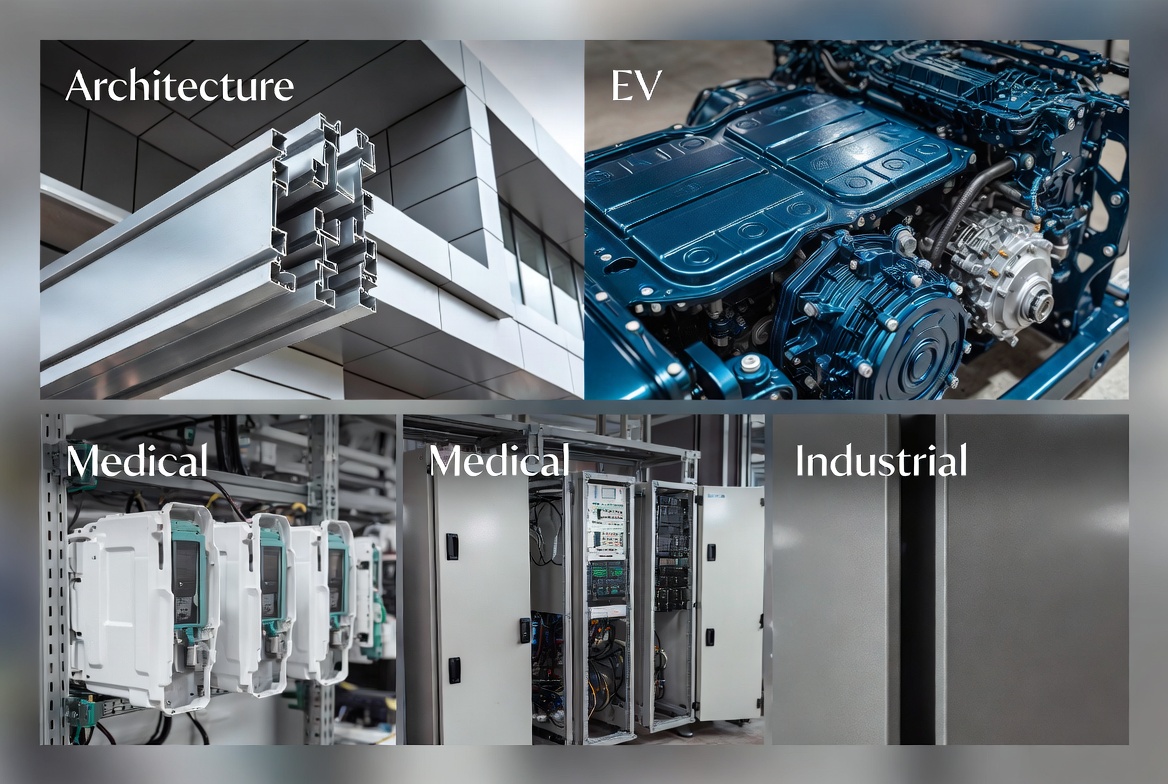
● Where Two-Coat Powder Systems Deliver the Most Value
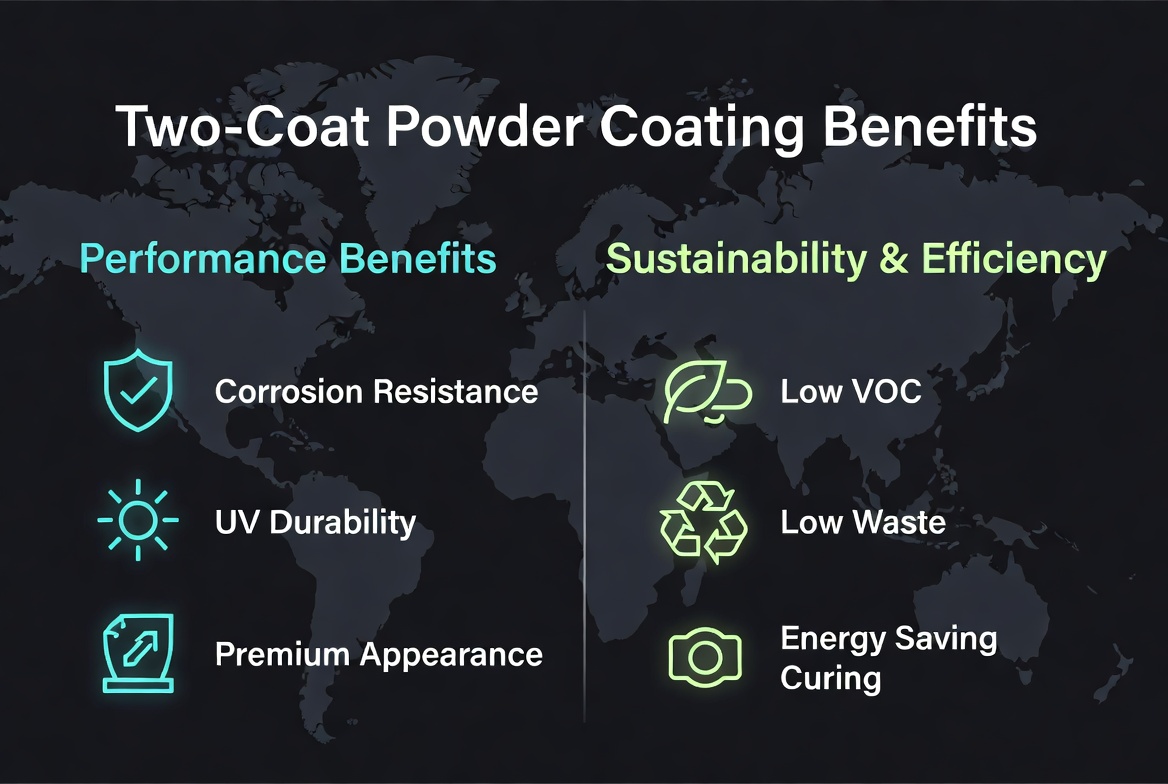
● Sustainability and Energy Efficiency in Two-Coat Systems
>> Low-VOC, Low-Waste Benefits
>> Lower-Temperature Curing and Energy Savings
● Practical Troubleshooting Tips from the Line
● How Yinda Technology Supports Two-Coat Powder Coating Projects
● Step-by-Step Checklist for Implementing a Two-Coat Powder System
● Call to Action – Partner with Yinda for High-Performance Two-Coat Solutions
● FAQs on Two-Coat Powder Coating
As a powder coating specialist working with global OEMs and fabricators, I have seen two-coat powder systems move from "advanced option" to "standard requirement" in sectors like architecture, EVs, and medical equipment. This guide explains how two-coat powder coating really works in production, when to use it, and how to optimize it for durability, appearance, and sustainability. [mordorintelligence]
A two-coat powder coating system applies two distinct powder layers to the same substrate—typically a primer plus topcoat or basecoat plus clear coat—to achieve higher protection and a more controlled aesthetic than single-coat systems. [mordorintelligence]
In practice, manufacturers use two-coat systems to:
- Improve corrosion resistance of aluminum profiles, steel structures, EV components, and outdoor equipment. [ralsonics]
- Achieve premium decorative effects, such as metallics, candies, chromes, and deep-gloss architectural finishes, while maintaining mechanical performance. [superiorcoaters.com]

From an industry perspective, two-coat powder systems are now widely adopted because they combine performance, sustainability, and process efficiency. [european-coatings]
Key advantages for modern manufacturing lines include:
- Superior durability: A dedicated primer under a weatherable topcoat significantly extends service life in harsh outdoor or coastal environments. [mordorintelligence]
- Enhanced aesthetics: Two-coat builds allow consistent gloss, color depth, metallic control, and "signature" finishes demanded by architects and brand owners. [superiorcoaters.com]
- Eco-friendly performance: Powder systems are *solvent-free*, low-waste and now often paired with low-temperature curing to reduce energy consumption. [european-coatings]
For a global powder coating supplier like Yinda Technology, which serves architectural profiles, doors and windows, NEVs, medical devices, hardware, and appliances across China, Indonesia, and Saudi Arabia, two-coat systems are a core tool for meeting varied regional performance standards and aesthetic expectations. [made-in-china]
At the heart of a successful two-coat system is controlled partial curing of the first layer (base or primer), followed by full curing of the complete coating stack. [mordorintelligence]
Below is a proven process used by industrial applicators when applying two powder layers on metals. [mordorintelligence]
1. Prepare and pretreat the substrate
- Clean, degrease, and pretreat (e.g., conversion coating or anodizing for aluminum) to ensure adhesion and long-term corrosion resistance. [ralsonics]
2. Apply the base coat (primer or color)
- Electrostatic application of the first powder layer with controlled film build based on the Product Data Sheet (PDS). [mordorintelligence]
3. Partial cure (pre-gel) the base coat
- Heat the coated part until the base layer reaches gel stage, where it looks glossy or sticky and has formed a network but is not fully cured. [mordorintelligence]
- A typical pre-gel window is around 392°F (200°C) for 2–3 minutes, subject to the powder supplier's PDS. [mordorintelligence]
4. Cool down to controlled temperature
- Remove the part from the oven and allow it to cool to approximately 175–200°F (79–93°C) before applying the second coat. [mordorintelligence]
5. Apply the topcoat (color or clear)
- Apply the second powder layer (top color or clear coat) with uniform coverage and attention to edge areas and complex geometries. [mordorintelligence]
6. Full cure cycle for the system
- Return the part to the oven and cure for a full cycle according to the topcoat's PDS (time/temperature combination). [mordorintelligence]
This pre-gel plus full cure strategy maximizes inter-coat adhesion and prevents delamination in field service. [mordorintelligence]
In production, time and temperature control are critical. The original process guidance provides practical curing windows based on substrate temperature, not just oven setpoint. [mordorintelligence]
| Substrate Temperature | Min. Curing Time | Max. Curing Time |
|---|---|---|
| 338°F (170°C) | 5 minutes | 10 minutes |
| 392°F (200°C) | 2.5 minutes | 5 minutes |
These ranges are commonly used for two-coat systems where the primary focus is corrosion resistance and standard colors in architectural and industrial applications. [mordorintelligence]
High-effect finishes such as candies, chromes, and metallics require more precise curing control to avoid color shift, mottling, or poor metallic lay. [superiorcoaters.com]
For brilliant reflective surface powder coatings:
- The system should be cured at 100% or at least 75% of the specified curing parameters. [mordorintelligence]
- Under-curing can dull the effect, hurt chemical resistance, and reduce weatherability. [superiorcoaters.com]
When using metallic powder coatings as base coats under a clear or color top layer:
- Recommended cure time for the metallic base is 50–75% of the full cure specified in the PDS. [mordorintelligence]
- This partial cure approach helps stabilize metallic orientation and reduces visible variations in effect across large surfaces. [mordorintelligence]
Examples of metallic two-coat uses include: premium aluminum window and door systems, branded NEV components, high-end appliances, and medical housings where consistent metallic appearance is critical. [superiorcoaters.com]
For metallic systems, typical full cure windows are: [mordorintelligence]
| Substrate Temperature | Min. Curing Time | Max. Curing Time |
|---|---|---|
| 338°F (170°C) | 10 minutes | 15 minutes |
| 392°F (200°C) | 7.5 minutes | 10 minutes |
These longer windows reflect the need for complete crosslinking and stable visual effects, especially in exterior and high-spec applications. [mordorintelligence]
In real factories, precision and consistency are what separate a premium two-coat system from mediocre results. Experienced applicators focus on several non-negotiable controls. [ralsonics]
To avoid contamination or poor adhesion:
- Keep the interval between base coat and topcoat below 12 hours. [mordorintelligence]
- Longer delays increase the risk of dust, oil, or moisture settling on the surface, which can cause craters, pinholes, or adhesion loss. [mordorintelligence]
Two-coat systems do not compensate for poor pretreatment. For best results:
- Use proper pretreatment matched to the substrate (e.g., zinc-phosphate or zirconium for steel, chromate-free systems for aluminum). [european-coatings]
- Always run suitability tests at the applicator's line to validate compatibility between pretreatment, primer, and topcoat. [mordorintelligence]
A common mistake is assuming that clear-coating an interior-grade powder automatically makes the system weather-resistant. In reality:
- Applying an exterior-grade clear coat over an interior-grade base does *not* create a fully weatherable system. [mordorintelligence]
- For outdoor exposure, both base and topcoat should be exterior-grade and tested for UV and humidity performance. [european-coatings]
From an industry and customer perspective, two-coat systems are especially valuable in high-spec, long-life, or design-driven applications. [oreateai]
Common use cases include:
- Architectural profiles and façades: Aluminum cladding, curtain walls, windows, and doors with long warranty requirements and strict color consistency. [european-coatings]
- New energy vehicles (NEVs): Battery housings, underbodies, brackets, and trim parts that need corrosion resistance plus brand-defining colors. [oreateai]
- Medical and laboratory equipment: Chemically resistant, easy-to-clean finishes with subtle metallic or textured effects for high-end devices. [ralsonics]
- Electrical cabinets and hardware: Extra protection against UV, moisture, and corrosion, especially for outdoor or coastal installations. [ralsonics]
As a multinational powder coating supplier, Yinda Technology aligns its product portfolio with these segments, delivering tailored two-coat solutions and eco-friendly formulations to partners across Asia and the Middle East. [aluminiumchina]
Modern powder coating strategies are deeply connected to sustainability targets and regulatory pressure on VOCs and energy use. [european-coatings]
Powder coatings are inherently solvent-free, and oversprayed powder can be recovered, significantly reducing waste compared to liquid systems. This makes two-coat powder systems particularly attractive where sustainability metrics are now part of project specifications. [ralsonics]
Recent industry developments include ultra-low temperature curing powders, which can cure at lower oven temperatures or shorter times, reducing overall energy consumption. When combined with optimized oven control and line speed, a well-designed two-coat process can support ESG and energy-efficiency goals without compromising quality. [superiorcoaters.com]
Two-coat systems are robust when properly controlled, but real-world lines face challenges. Below are common issues and practical solutions drawn from field experience and industry best practices. [superiorcoaters.com]
1. Poor inter-coat adhesion
- Check whether the base coat was over-cured before topcoat application.
- Adjust to a partial cure (e.g., 50–75% of full cure) before applying the second layer. [mordorintelligence]
2. Color shift or dull appearance in candies/chromes
- Verify that curing is within 100–75% of the recommended window for high-effect powders. [mordorintelligence]
- Avoid excessive over-bake, which can reduce brilliance. [superiorcoaters.com]
3. Metallic mottling or inconsistent effect
- Confirm that the metallic base coat was pre-gelled at 50–75% of the cure to stabilize flake orientation. [mordorintelligence]
- Maintain stable gun settings, part grounding, and consistent film thickness. [superiorcoaters.com]
4. Contamination and surface defects
- Minimize the time between coats and protect pre-gelled parts from dust and oil. [mordorintelligence]
- Regularly clean application booths and check compressed air quality. [ralsonics]
With R&D, manufacturing, and application support centers in China, Indonesia, and Saudi Arabia, Yinda Technology provides localized technical service for two-coat projects across diverse climates and regulatory environments. [indoent]
What this means for OEMs and coaters:
- Access to application engineering for line audits, curing optimization, and defect troubleshooting.
- Regionally adapted eco-friendly powder systems aligned with global trends in low-VOC, energy-efficient coating technologies. [european-coatings]
- Support for customized two-coat solutions for architectural, EV, medical, and industrial customers seeking both performance and brand-specific aesthetics. [superiorcoaters.com]
For plant engineers and coating supervisors, the following checklist helps ensure a smooth transition or optimization of two-coat operations.
1. Define performance and appearance requirements
- Corrosion class, UV stability, gloss, metallic effect, texture, and warranty targets. [european-coatings]
2. Select compatible primer/base and topcoat
- Use systems designed to work together, and verify inter-coat adhesion in lab testing. [ralsonics]
3. Validate pretreatment and cure schedule
- Confirm pretreatment type, oven profile, and film build through trial runs and cross-hatch tests. [ralsonics]
4. Establish process windows and work instructions
- Document substrate temperature targets, partial cure times, cooling range, and full cure parameters in SOPs. [mordorintelligence]
5. Train operators and quality teams
- Focus on visual recognition of pre-gel state, correct handling between coats, and standard inspection criteria.
6. Monitor and optimize energy usage
- Track oven temperatures, line speed, and curing efficiency, especially if using low-temperature curing powders. [ralsonics]
If you are planning to upgrade from single-coat systems, launch new NEV components, or meet stricter architectural and sustainability specifications, a well-engineered two-coat powder system can give you a measurable advantage in durability, brand appearance, and energy efficiency. [ralsonics]
Contact Yinda Technology to:
- Evaluate your current coating line and pretreatment.
- Specify the right primer/topcoat or base/clear system for your substrates and markets.
- Run joint trials to fine-tune curing profiles, film builds, and appearance before full-scale rollout. [made-in-china]
1. When should I choose a two-coat powder system over a single coat?
Use two-coat systems when you need higher corrosion resistance, longer outdoor durability, or complex aesthetic effects such as metallics and candies that a single coat cannot reliably provide. [mordorintelligence]
2. Is a clear coat over an interior-grade powder suitable for outdoor use?
No. A clear exterior-grade coat over an interior-grade base does not create a fully weatherable system; both layers should be exterior-grade for long-term outdoor exposure. [european-coatings]
3. How long can I wait between applying the base coat and the topcoat?
To minimize contamination and adhesion problems, it is recommended that the time between coats does not exceed 12 hours, with parts protected from dust and oil in the interim. [mordorintelligence]
4. Why is partial curing (pre-gel) so important in two-coat systems?
Partial curing ensures the base coat is firm enough to handle but still open for chemical bonding with the topcoat, optimizing inter-coat adhesion and reducing the risk of delamination. [ralsonics]
5. Are two-coat powder systems compatible with energy-saving or low-temperature curing technologies?
Yes. Modern powder formulations include low-temperature curing options that allow two-coat systems to reach full properties with lower bake temperatures or shorter cycles, reducing overall energy usage. [superiorcoaters.com]
1. TIGER Coatings – “Two-Coat Powder Coating Application Process” (technical guidance on two-coat curing and process steps). https://www.tiger-coatings.com/us-en/tiger-group/tiger-blog/two-coat-powder-coating-application-process
2. Mordor Intelligence – “Powder Coatings Market Size, Growth Trends & Industry Share, 2031” (market adoption and sector trends). https://www.mordorintelligence.com/industry-reports/powder-coatings-market
3. Ralsonics – “New Trends in Eco-Friendly Surface Coating Chemistries” (sustainability, low-VOC, and low-temperature curing developments). https://www.ralsonics.com/new-trends-in-eco-friendly-surface-coating-chemistries/
4. European Coatings – “Review surveys eco-friendly coatings from chemistry to use” (overview of sustainable coating technologies, including powder). https://www.european-coatings.com/news/coatings-technologies/review-surveys-eco-friendly-coatings-from-chemistry-to-use/
5. Superior Coaters – “Innovations & Emerging Technologies in Powder Coating” (application technologies, robotics, and advanced effects). https://superiorcoaters.com.au/emerging-powder-coating-innovations-trends/
6. Guangdong Yinda Technology Co., Ltd. – Company and exhibitor information (global presence and business scope). https://www.aluminiumchina.com/en-gb/exhibitors/exhibitor-details.guangdong%20yinda%20technology%20co%20ltd.org-c71d9b77-fdb4-4b
7. Guangzhou Yinda Powder Coatings / Yinda Technology – Corporate profile and product scope. https://www.made-in-china.com/showroom/6f4b36fdadb3f5c8/
8. Indoent – (Yinda Technology Indonesia plant investment). https://www.indoent.com/en/4165.html


