Language


Views: 277 Author: Yinda Powder Coating Publish Time: 2026-09-23 Origin: Site


Content Menu
● What Makes Powder Coating Resistant to Corrosion?
● Why a Complete Coating System Matters
● Choosing the Right Powder Coating Chemistry
>> Epoxy Powder Coatings for Strong Indoor Protection
>> Polyester Powder Coatings for Outdoor Metal Products
>> Epoxy-Polyester Hybrid Powder Coatings for General Use
>> Specialty Powder Coatings for Demanding Industries
● Powder Coating vs. Other Corrosion Protection Methods
● The Application Process That Determines Real Performance
>> 1. Prepare the Substrate Thoroughly
>> 2. Apply an Even Powder Film
>> 3. Cure According to the Actual Metal Temperature
>> 4. Inspect Before Products Leave the Line
● How to Specify a Corrosion-Resistant Powder Coating
>> Architectural Profiles, Doors, and Windows
>> New-Energy Vehicles and Components
>> Hardware and Electrical Products
● Maintenance Helps Extend Service Life
● Work With a Powder Coating Partner That Understands Your Application
>> Is powder-coated steel completely rust-proof?
>> Which powder coating is best for outdoor corrosion resistance?
>> Does aluminum need powder coating if it does not rust?
>> What is the most important step before powder coating?
>> How thick should a powder coating be for corrosion protection?
>> Can powder coating be used in coastal environments?
>> Is a salt spray test enough to predict outdoor service life?
Corrosion is rarely caused by one factor alone. Moisture, salts, airborne pollutants, UV radiation, chemical contact, poor pretreatment, and mechanical damage can work together to shorten the service life of metal components. For manufacturers of architectural profiles, doors and windows, new-energy vehicles, medical equipment, hardware, and electrical products, selecting the right powder coating system is therefore a critical engineering decision—not simply a color decision.
At Yinda Technology, we develop and manufacture powder coatings and environmentally responsible material solutions for industrial applications. With operations in China, Indonesia, and Saudi Arabia, we work with customers that need dependable finishes across different climates, substrates, production methods, and end-use conditions. A well-designed powder coating system can provide a durable protective layer, improve appearance, support efficient production, and help reduce risks associated with corrosion-related failures.
However, it is important to be precise: powder-coated steel is not automatically rust-proof, and a powder coating alone cannot compensate for inadequate pretreatment, unsuitable film thickness, incorrect curing, poor edge coverage, or severe service exposure. Long-term corrosion protection depends on the complete system.

Powder coating is a dry finishing technology in which finely ground resin, pigments, additives, and performance agents are electrostatically applied to a prepared surface. The coated part is then heated so the powder melts, flows, and cures into a continuous protective film.
Unlike conventional liquid coatings, powder coatings are generally formulated without the large solvent content associated with many liquid paint systems. Their performance comes from the cured film's ability to act as a physical and chemical barrier between the substrate and corrosive conditions.
For metal products, corrosion resistance depends on preventing water, oxygen, salts, and chemicals from reaching the substrate. A properly selected and properly applied powder coating supports this goal through several mechanisms:
- Barrier protection: The cured coating isolates the metal from moisture and atmospheric contaminants.
- Strong adhesion: Effective pretreatment and compatible chemistry help the film remain bonded to the substrate.
- Film continuity: Uniform coverage reduces weak points where corrosive agents can penetrate.
- Mechanical durability: Resistance to impact, abrasion, chipping, and scratching helps preserve the protective barrier during handling and service.
- Chemical resistance: Certain formulations can withstand cleaners, oils, weak acids, alkalis, and industrial environments more effectively than general-purpose coatings.
- Outdoor durability: Appropriate exterior-grade powder coatings can help retain color, gloss, and surface integrity under UV exposure and weathering.
The key principle is simple: corrosion protection is only as strong as the weakest point in the coating system. A durable powder coating on a poorly cleaned substrate may fail early. Conversely, the right pretreatment, coating chemistry, thickness, curing profile, and inspection process can create a much more reliable finish.
A powder coating should not be specified by color alone. A black, white, gray, metallic, textured, matte, or high-gloss finish may look similar at the beginning of a project, yet perform very differently after years of exposure.
For this reason, experienced coating professionals assess the full set of conditions before recommending a system:
| Selection Factor | Why It Matters for Corrosion Protection | Questions to Ask |
|---|---|---|
| Substrate | Steel, galvanized steel, aluminum, cast aluminum, and zinc alloys require different preparation methods | What metal is being coated? |
| End-use environment | Indoor, outdoor, coastal, industrial, humid, chemical, and high-UV environments create different risks | Will the part face salt, condensation, chemicals, or sunlight? |
| Pretreatment | Cleaning and conversion treatment influence adhesion and under-film corrosion resistance | Is the pretreatment line controlled and regularly tested? |
| Coating chemistry | Epoxy, polyester, hybrid, polyurethane, fluoropolymer, and specialty systems offer different strengths | Is chemical resistance, UV durability, or impact resistance the priority? |
| Film thickness | Too little film may provide incomplete protection; too much may affect appearance or flexibility | Is thickness measured consistently across edges, corners, and recessed areas? |
| Cure schedule | Under-curing may weaken film formation; over-baking may reduce appearance or performance | Is the oven profile verified on the actual part? |
| Product geometry | Sharp edges, welds, holes, corners, and cavities are common corrosion starting points | Has the part been designed for drainage, coverage, and coating access? |
A successful project begins with a service-life question, not merely a price question: what conditions must the component withstand, and for how long?
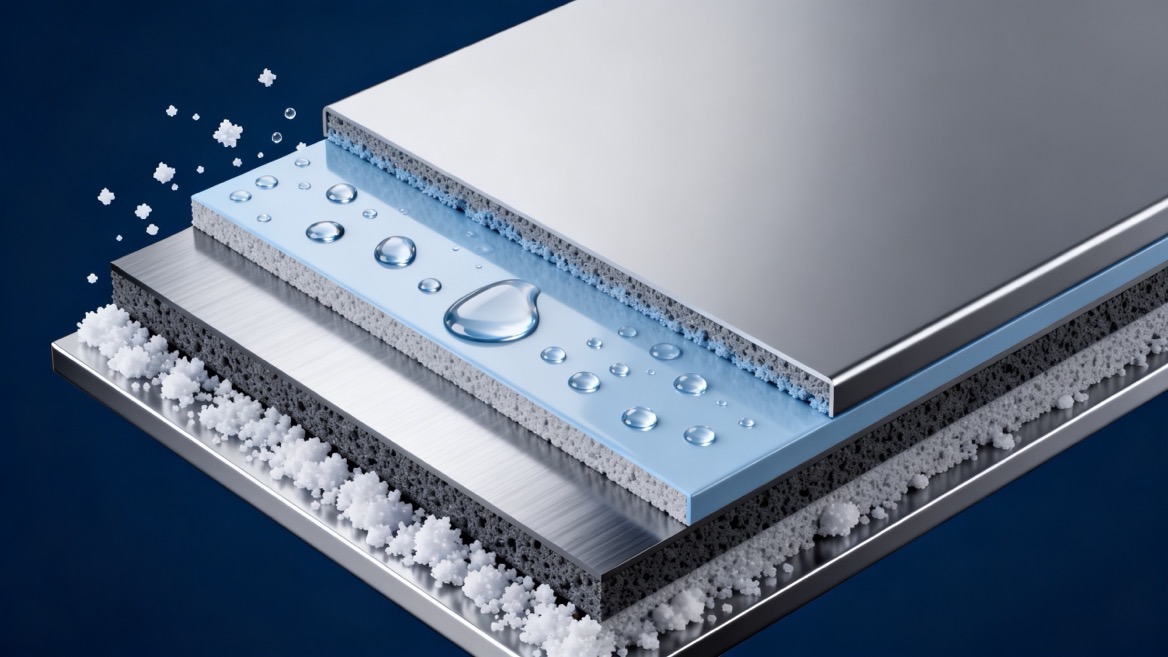
Different powder coating technologies address different operating environments. Selecting the wrong chemistry can create unnecessary maintenance costs, premature visual deterioration, or corrosion-related claims.
Epoxy powder coatings are widely valued for adhesion, chemical resistance, and corrosion resistance. They are often used for indoor machinery, industrial equipment, electrical cabinets, pipelines, shelving, valves, automotive components, and products exposed to chemicals or cleaning agents.
Their principal limitation is outdoor weathering. Epoxy coatings can chalk and lose appearance when exposed to prolonged sunlight. They are therefore generally better suited to interior or sheltered applications where chemical resistance and substrate protection are more important than long-term UV appearance.
Polyester powder coatings are commonly selected for exterior applications because they offer a practical balance of weatherability, mechanical durability, color options, and processing efficiency. They are widely used for building materials, aluminum profiles, window and door systems, garden products, outdoor furniture, appliances, and many hardware applications.
For general outdoor exposure, polyester systems often provide a strong starting point. For harsh sunlight, demanding architectural projects, or long design-life expectations, the coating should be selected according to the relevant project specification and environmental severity rather than described only as "outdoor grade."
Hybrid powder coatings combine properties associated with epoxy and polyester chemistries. They are often used for indoor products requiring attractive appearance, good mechanical performance, and reasonable corrosion resistance.
Typical applications include office furniture, shelving, lighting products, household appliances, electrical products, and indoor metal fixtures. Their outdoor durability is generally lower than that of dedicated exterior polyester systems.
Some applications require protection beyond standard decorative finishes. Specialty powder coating solutions can be designed for specific requirements, including:
- High-temperature resistance for selected industrial components
- Antimicrobial properties for suitable equipment and touch surfaces
- Low-temperature curing for heat-sensitive substrates or energy-conscious processes
- Fine textures that help conceal surface irregularities
- Anti-graffiti or easy-clean surface properties
- Enhanced chemical resistance for industrial and laboratory environments
- Insulating powder coatings for electrical components
- High-performance architectural systems for demanding exterior conditions
For medical equipment, new-energy vehicle parts, electrical enclosures, and high-value architectural components, a generic coating specification may not be enough. Application-specific testing and sample evaluation are essential.
Powder coating is highly effective in many applications, but it is not the only corrosion-control option. The best solution depends on substrate, geometry, environment, cost targets, visual requirements, repair needs, and expected service life.
| Method | Main Strengths | Key Limitations | Suitable Uses |
|---|---|---|---|
| Powder coating | Durable, efficient, broad color range, attractive finish, low-solvent process | Requires proper pretreatment and controlled curing; damaged areas may need repair | Profiles, appliances, hardware, cabinets, vehicle parts, equipment |
| Liquid paint | Easy field repair and broad application flexibility | Solvent management may be required; lower film build can require multiple coats | Large structures, on-site repair, complex assemblies |
| Galvanizing | Strong sacrificial protection for steel, especially in outdoor exposure | Limited decorative options; may need a topcoat for color and appearance | Steel structures, fencing, infrastructure, fasteners |
| Duplex system | Combines galvanizing with a protective topcoat | Higher initial process complexity and cost | Coastal, industrial, and high-corrosion steel structures |
| Anodizing | Integral aluminum oxide layer with metallic appearance | Primarily for aluminum; color and design options differ from coatings | Aluminum profiles, architectural components, consumer products |
| Electroplating | Decorative metallic finishes and targeted functional properties | Process chemistry and substrate limitations must be managed | Hardware, fixtures, automotive trim, electronic components |
For highly corrosive environments, a duplex approach—such as galvanizing plus a compatible powder coating—may provide additional protection. The two layers can work together: zinc helps protect exposed steel, while the powder coating adds an attractive, durable, and weather-resistant barrier.
Even a premium powder coating cannot deliver its intended performance if the production process is inconsistent. In our experience, most preventable coating failures can be traced to one or more of five areas: surface contamination, weak pretreatment control, inadequate grounding, uneven film thickness, or incorrect cure conditions.
Surface preparation is the foundation of coating adhesion. Oils, grease, welding residues, oxides, dust, fingerprints, and salts can interfere with the bond between the powder coating and substrate.
A typical preparation sequence may include:
1. Degreasing to remove oils and manufacturing residues
2. Rinsing to prevent chemical carryover
3. Mechanical treatment where required, such as blasting or sanding
4. Chemical conversion treatment appropriate to the substrate
5. Final rinse and drying before coating application
Steel, galvanized steel, aluminum, and cast components require different preparation parameters. Aluminum, for example, does not rust in the same manner as steel, but it can still corrode and suffer coating adhesion problems if its surface is poorly prepared.
Electrostatic spray application charges the powder particles so they are attracted to the grounded metal part. This process supports efficient transfer and uniform coverage, but part geometry still matters.
Sharp edges, deep recesses, internal corners, weld seams, and Faraday-cage areas can receive less powder than broad flat surfaces. These locations deserve special attention because they can become early failure points.
Operators should verify:
- Gun voltage and current settings
- Powder flow and atomizing air settings
- Grounding quality
- Booth airflow and recovery conditions
- Distance and angle between gun and part
- Film thickness at representative locations
Curing is not simply "placing the part in an oven." The coating must achieve the required metal temperature and dwell time to form the intended polymer network.
A thick steel component and a thin aluminum profile may enter the same oven but reach curing temperature at very different times. Oven air temperature alone does not confirm that the product itself has cured correctly.
Use temperature profiling and routine production verification to confirm that the actual part reaches the coating supplier's recommended cure schedule.
Inspection should include visual appearance, gloss where relevant, film thickness, adhesion, cure verification, and project-specific performance testing. When corrosion resistance is critical, customers should agree on the test method, duration, evaluation criteria, sample preparation, and acceptable results before production begins.
ISO 9227 describes neutral salt spray, acetic acid salt spray, and copper-accelerated acetic acid salt spray procedures used to assess corrosion resistance of metallic materials and protective coatings. It is an important comparative test method, but salt spray hours should not be interpreted as a direct prediction of real-world service life. Actual field performance also depends on UV exposure, wet-dry cycling, temperature changes, design details, contaminants, and maintenance conditions.
A strong specification reduces ambiguity between the product designer, coating manufacturer, applicator, contractor, and end user. Instead of requesting only "black powder coating" or "outdoor powder coating," define the performance need.
Use this practical specification checklist:
1. Identify the substrate. State whether the material is steel, galvanized steel, aluminum extrusion, die-cast aluminum, zinc alloy, or another metal.
2. Define the service environment. Describe indoor, outdoor, coastal, industrial, humid, chemical, high-UV, or sheltered conditions.
3. Select the coating family. Match chemistry to the environment, such as epoxy for indoor chemical exposure or weatherable polyester for outdoor applications.
4. Set the target finish. Include color standard, gloss range, texture, film thickness, and acceptable visual tolerances.
5. Specify pretreatment requirements. Define cleaning and conversion treatment standards suitable for the substrate and end use.
6. Agree on performance tests. Select relevant adhesion, impact, humidity, cyclic corrosion, salt spray, chemical resistance, and weathering tests.
7. Control production conditions. Require documented cure verification, thickness measurement, and inspection records.
8. Plan for damage and maintenance. Consider transport, installation, touch-up procedures, cleaning guidance, and long-term inspection.
For architectural aluminum, performance categories such as AAMA 2604 and AAMA 2605 are commonly referenced to distinguish high-performance and superior-performance organic coating requirements. These categories include demanding weathering and corrosion evaluations, making them useful reference points for exterior projects when applicable.
The same coating is not automatically suitable for every industry. The operating environment and failure consequences should guide the selection process.
Exterior aluminum systems must manage UV exposure, rain, condensation, pollutants, temperature cycling, and—in coastal regions—salt deposition. Coating appearance is highly visible, so color retention, gloss retention, chalking resistance, and edge coverage are as important as corrosion resistance.
For high-exposure projects, select a coating system based on the building location, façade orientation, cleaning access, design life, and required architectural performance category.
Battery enclosures, brackets, chassis parts, charging equipment, and associated hardware may experience road salts, moisture, stone impact, thermal cycling, and chemical exposure. These applications often require a balanced combination of corrosion resistance, mechanical durability, electrical properties, process efficiency, and compatibility with automated production.
Medical equipment may require smooth, cleanable surfaces that resist regular disinfection and frequent handling. Coating selection should consider cleaning chemicals, hygiene requirements, appearance retention, substrate type, and the intended regulatory environment. Antimicrobial claims should only be made when supported by the relevant formulation data and applicable test evidence.
Hardware, cabinets, enclosures, fixtures, tools, and electrical products may face abrasion, fingerprints, cleaning agents, humidity, and occasional impact. The best result often comes from selecting a coating that balances appearance, edge coverage, adhesion, scratch resistance, and throughput rather than pursuing a single performance metric.
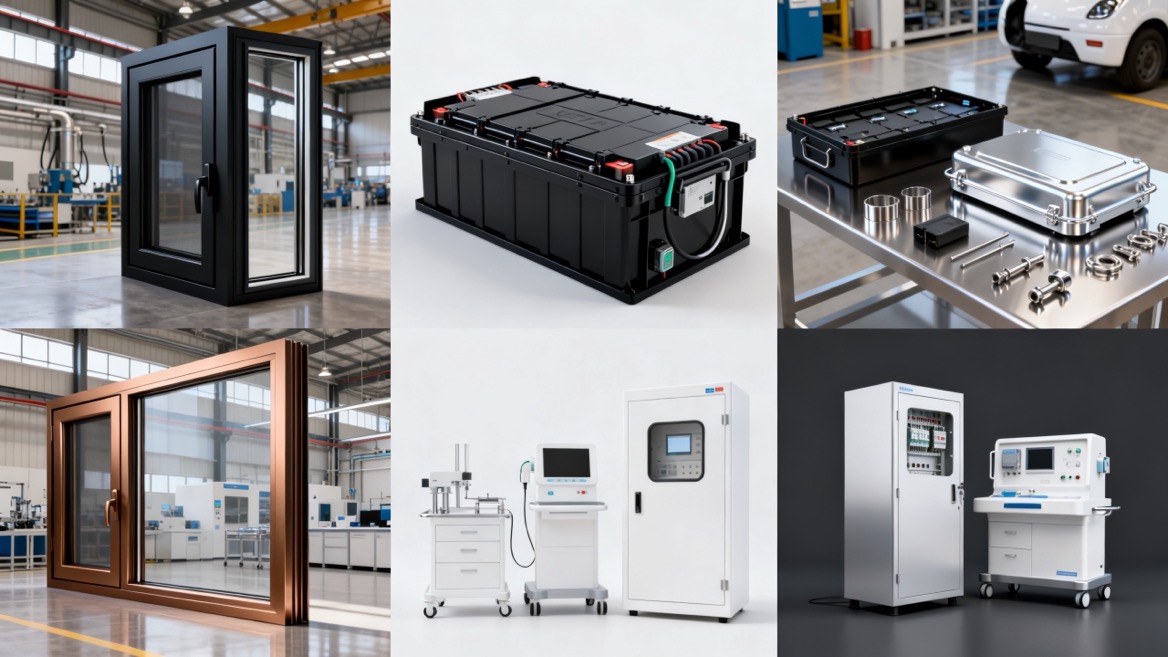
A powder-coated surface should be maintained even when it appears durable. Regular care reduces the risk that dirt, salt, pollutants, and trapped moisture will damage the finish over time.
- Wash exterior surfaces periodically using clean water and a mild, non-abrasive detergent.
- Avoid aggressive solvents, abrasive pads, wire brushes, and highly alkaline cleaners unless the coating supplier confirms compatibility.
- Remove salt deposits, industrial fallout, and bird droppings promptly where practical.
- Inspect edges, fasteners, joints, drainage points, and impact-prone areas.
- Repair chips or scratches early, especially on steel substrates.
- Ensure water can drain from assemblies and does not remain trapped in crevices.
A coating system protects best when it is supported by good product design. Sharp unprotected edges, water traps, untreated welds, incompatible fasteners, and poorly sealed joints can undermine the performance of an otherwise excellent coating.
Corrosion protection should be treated as a collaborative engineering process. The right solution begins with understanding your substrate, part geometry, production equipment, climate, performance target, color requirement, and cost priorities.
Yinda Technology supports industrial customers with powder coating development, manufacturing, technical consultation, color matching, and application-oriented recommendations. Our teams in China, Indonesia, and Saudi Arabia can help customers evaluate coating options for architectural profiles, doors and windows, new-energy vehicle components, medical equipment, hardware, electrical products, and other metal applications.
If you are developing a new product, improving an existing coating line, or facing corrosion-related quality concerns, contact Yinda Technology to discuss your substrate, service environment, target standard, and finish requirements. We can help you build a coating specification designed for real production conditions—not only for an initial visual result.
No. Powder-coated steel has strong corrosion resistance when the coating system is properly specified and applied, but it is not completely rust-proof. If the coating is chipped, poorly bonded, too thin, under-cured, or damaged at edges and joints, moisture can reach the steel and corrosion can begin.
For many outdoor applications, weatherable polyester powder coatings are a practical choice because they provide good durability and UV resistance. More demanding architectural, coastal, or long-life projects may require a higher-performance system selected against the project's environmental conditions and test requirements.
Yes, depending on the application. Aluminum does not form red rust like steel, but it can still corrode, stain, pit, or lose appearance in aggressive environments. Powder coating can improve appearance, UV resistance, surface durability, color consistency, and protection against environmental exposure.
Surface preparation is the most important step. Degreasing, rinsing, conversion treatment, drying, and contamination control strongly influence adhesion and resistance to under-film corrosion. A high-quality powder coating cannot compensate for inadequate pretreatment.
The appropriate thickness depends on the powder chemistry, substrate, end-use environment, and applicable specification. Thickness should be uniform and verified, particularly on edges, corners, and complex geometries. More thickness is not always better because excessive film build can affect appearance, flexibility, and curing.
Yes, but coastal exposure requires careful system design. Salt deposits, high humidity, UV exposure, and wet-dry cycling can accelerate corrosion. Use suitable pretreatment, an exterior-grade or high-performance coating system, good edge coverage, compatible materials, proper drainage, and regular cleaning.
No. Salt spray testing is useful for comparing coating systems and evaluating corrosion behavior under controlled laboratory conditions, but it does not reproduce all real-world exposure factors. Outdoor durability also depends on sunlight, temperature cycling, humidity, pollutants, mechanical damage, product design, and maintenance.
1. [Kroma Coatings — Why Powder Coating Powders Are Best for Corrosion Resistance]
4. [Teknos — Powder Coating as a Corrosion Protection Method]
5. [Fenestration and Glazing Industry Alliance — AAMA 2604 and AAMA 2605 Testing Protocols]
6. [High Performance Coatings — Understanding AAMA 2605 Standards for High-Performance Coatings]
7. [IFS Coatings — Architectural Powder Coatings and AAMA Performance Requirements]


