Language


Views: 282 Author: Yinda Powder Coating Publish Time: 2026-08-15 Origin: Site


Content Menu
● Understanding C4-C5 Corrosive Environments
● How Each Protection System Works
>> Zinc-Rich Powder Primer + Polyester Topcoat
● Zinc-Rich Powder Coating vs. Hot-Dip Galvanizing
● Corrosion Performance in C4-C5 Conditions
● When Zinc-Rich Powder Primer + Polyester Is the Better Choice
>> Expert Insight: The System Is Only as Strong as Surface Preparation
● When Hot-Dip Galvanizing Is the Better Choice
● The Duplex Option: Galvanizing Plus Powder Coating
● Practical Selection Checklist
>> Example: Outdoor Electrical Enclosure
● Recommended Choice for Industrial Manufacturers
● FAQ
>> 1. Can polyester powder coating be used directly on steel in C5 environments?
>> 2. Is zinc-rich powder primer better than hot-dip galvanizing?
>> 3. What coating thickness is suitable for a zinc-rich powder primer + polyester system?
>> 4. Can powder coating be applied over hot-dip galvanized steel?
>> 5. Does hot-dip galvanizing prevent rust forever?
>> 6. Why do coated steel edges often corrode first?
>> 7. Can zinc-rich powder coatings replace liquid zinc-rich primers?
For steel assets operating in C4-C5 corrosive industrial environments, the choice between a zinc-rich powder primer + polyester topcoat and hot-dip galvanizing affects durability, appearance, fabrication workflow, maintenance planning, and total project cost. Both systems use zinc to protect steel, but they do so through different mechanisms—and neither is automatically the best choice for every industrial application.
At Yinda Technology, we work with manufacturers serving architectural profiles, doors and windows, new-energy vehicles, medical equipment, hardware, and electrical products. From a coating-engineering perspective, the right solution depends less on choosing a "stronger" coating in isolation and more on matching the protection system to the part geometry, exposure conditions, visual requirements, expected service life, and repair strategy.

C4 and C5 classifications describe atmospheric conditions where unprotected carbon steel can corrode rapidly. These conditions are common in industrial zones, coastal facilities, chemical-processing areas, logistics hubs, ports, offshore-adjacent locations, and infrastructure exposed to persistent moisture, salt, sulfur compounds, or industrial pollutants.
| Corrosivity level | Typical exposure conditions | Common applications |
|---|---|---|
| C4 High | Industrial areas with moderate salinity or pollution; humid production plants | Factory structures, HVAC equipment, exterior cabinets, agricultural machinery |
| C5 Very High | Coastal industrial regions, chemical plants, offshore-adjacent facilities, highly humid and polluted sites | Port equipment, petrochemical structures, energy infrastructure, marine-facing buildings |
The key issue is not simply whether steel rusts. In severe exposure, corrosion often begins at edges, welds, fasteners, scratches, crevices, and drainage-poor zones. Therefore, a coating system must deliver reliable protection across the complete component—not only on flat test panels.
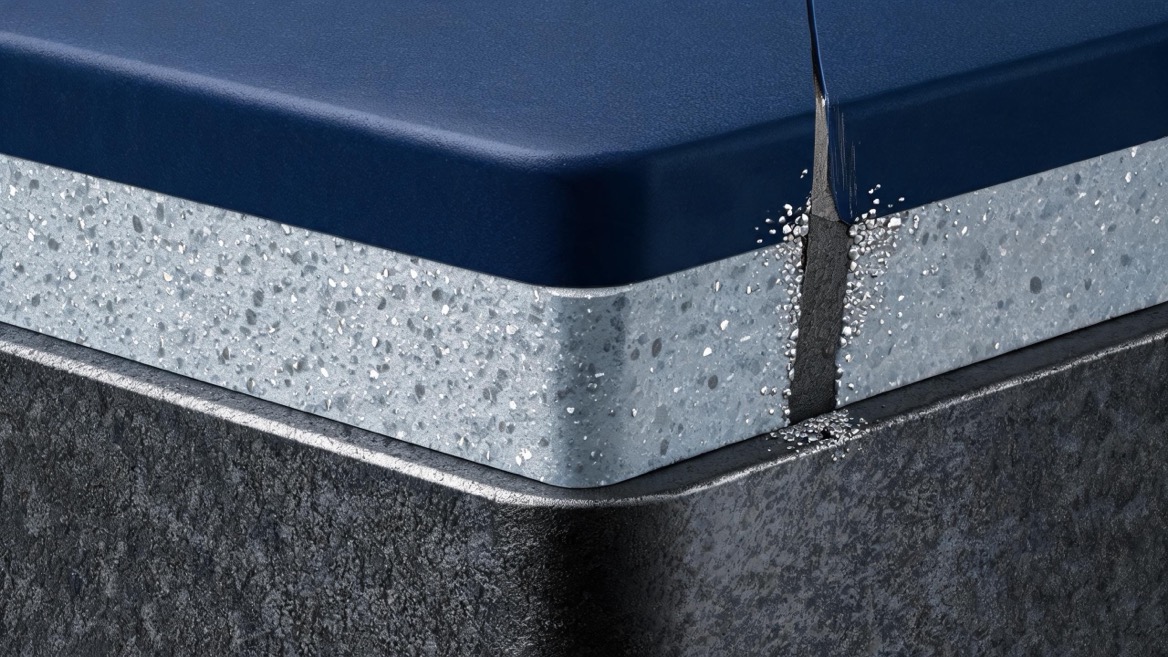
A zinc-rich powder primer + polyester system is a multilayer coating solution. The primer contains zinc particles that provide active corrosion protection. The polyester topcoat creates a durable external barrier against moisture, UV radiation, weathering, and contaminants.
In a properly designed powder coating system:
1. The steel is cleaned and pretreated.
2. A zinc-rich powder primer is applied electrostatically.
3. The primer is cured or partially cured according to the coating process.
4. A polyester powder topcoat is applied.
5. The complete system is cured to create a continuous multilayer protective film.
The zinc-rich primer helps protect damaged areas through sacrificial zinc activity, while the polyester layer reduces the penetration of water, oxygen, salts, and industrial pollutants.
This structure combines active protection and barrier protection. It is particularly valuable when a project requires both corrosion resistance and a high-quality decorative finish.
Hot-dip galvanizing protects steel by immersing fabricated components into molten zinc. The process creates a zinc coating metallurgically bonded to the steel substrate.
The resulting coating normally includes several zinc-iron alloy layers and an outer zinc layer. This bond makes hot-dip galvanizing highly resistant to mechanical damage in many structural applications.
Hot-dip galvanizing protects steel in two ways:
- Barrier protection: Zinc separates the steel from the environment.
- Sacrificial protection: Zinc corrodes preferentially to exposed steel around small damaged areas.
For large structural steelwork, poles, rails, gratings, guardrails, transmission components, and outdoor fabricated assemblies, hot-dip galvanizing remains a widely used solution. ASTM A123/A123M specifies minimum average coating thickness requirements that vary by product category and steel thickness. Typical specified thickness grades can range from approximately 45 μm to 100 μm, depending on the steel product and dimensions.
| Evaluation factor | Zinc-rich powder primer + polyester | Hot-dip galvanizing |
|---|---|---|
| Protection mechanism | Zinc-rich active primer plus polyester barrier layer | Zinc barrier plus sacrificial zinc protection |
| Appearance | Wide color range, gloss options, textures, smooth decorative finish | Metallic gray appearance; surface can vary with steel chemistry and process conditions |
| UV resistance | High when using an exterior-grade polyester topcoat | Zinc develops a natural patina; color control is limited |
| Film thickness control | Controlled through application parameters and coating specification | Varies with steel thickness, chemistry, fabrication and immersion conditions |
| Complex geometry | Excellent for many fabricated parts, but Faraday-cage areas need process control | Excellent coverage inside many hollow sections if vented and drained correctly |
| Sharp edges | Requires edge preparation and adequate film build | Naturally coats edges, though coating thickness can vary |
| Post-coating fabrication | Welding, drilling, and cutting damage the coating and require repair | Welding, drilling, and cutting after galvanizing also require repair |
| Color and branding | Strong option for architectural and branded industrial equipment | Limited unless followed by an additional coating layer |
| Repair approach | Local powder repair may require liquid touch-up or re-coating | Zinc-rich repair materials commonly used for damaged areas |
| Process temperature impact | Curing commonly requires elevated oven temperatures | Molten-zinc immersion can create distortion risk for thin or stressed fabrications |
| Best fit | Decorative industrial products, enclosures, profiles, equipment and color-critical components | Heavy structural steel, large outdoor assemblies, infrastructure and rugged fabricated parts |
A high-performance coating decision should never rely only on a single salt-spray figure. Salt-spray testing is useful for comparing coating behavior under controlled conditions, but it does not fully reproduce real exposure conditions involving UV, wet-dry cycling, temperature changes, pollutants, crevices, impact, and installation damage.
For C4-C5 environments, decision-makers should assess:
- Coating system design, not only a primer or topcoat alone
- Total dry-film thickness
- Steel pretreatment quality
- Edge coverage and weld preparation
- Resistance to creep from scribe damage
- Weathering resistance of the topcoat
- Drainage and water-retention risks
- Maintenance access and repair requirements
- Expected time to first major maintenance
Research on zinc-rich polyester powder coatings shows that zinc content, pigment conductivity, coating thickness, and formulation significantly influence corrosion protection. One study found that an iron-phosphide conductive additive enabled reduced zinc content while maintaining cathodic protection performance; the reported system reduced corrosion creepage by about 20% after 2,500 hours of salt-spray testing under the study conditions.
This does not mean every zinc-rich powder coating will provide identical performance. It shows why formulation quality matters. A zinc-rich powder primer must be engineered as part of the complete system, rather than treated as a generic commodity coating.
For Yinda Technology customers, a zinc-rich powder primer + polyester topcoat is often the stronger option when the product needs corrosion protection and a premium finished appearance.
It is especially suitable for:
- Architectural aluminum or steel components requiring stable color
- Doors, windows, frames, and façade-related metal products
- Electrical cabinets and outdoor enclosures
- Hardware, appliance components, and industrial equipment housings
- New-energy vehicle components with demanding appearance requirements
- Medical equipment frames requiring clean, consistent, easy-to-maintain surfaces
- Machinery exposed to humidity, pollution, and intermittent outdoor weather
The polyester topcoat adds a major practical advantage: it can be supplied in different colors, gloss levels, textures, and visual effects. This helps equipment manufacturers integrate corrosion resistance into their product design rather than treating protection as a separate structural requirement.
A properly specified zinc-rich powder primer plus polyester topcoat can also avoid the visual inconsistency often associated with galvanized surfaces. For customer-facing equipment, branded machinery, architectural applications, and high-value manufactured products, this can be commercially important.
In our experience, many coating failures blamed on "insufficient corrosion resistance" actually originate from preparation and design issues. Typical causes include poor degreasing, unstable pretreatment, sharp unprepared edges, contamination, trapped moisture, inadequate film thickness, or poor drainage design.
For severe-service steel components, the coating specification should clearly define:
- Substrate condition and cleaning method
- Conversion treatment or pretreatment process
- Primer type and target thickness
- Polyester topcoat type and target thickness
- Curing conditions
- Adhesion and impact criteria
- Corrosion-testing requirements
- Repair procedure for damaged locations
A coating system becomes reliable when the material, process, part design, and quality-control plan work together.
Hot-dip galvanizing is often the practical choice for heavy steel components that prioritize rugged, long-term atmospheric protection over decorative appearance.
It is commonly preferred for:
- Transmission towers and utility structures
- Road barriers and guardrails
- Steel beams and large fabricated frames
- Handrails, ladders, gratings, and platforms
- Agricultural structures
- Structural supports in humid industrial facilities
- Outdoor steelwork where repainting access is difficult
One major benefit is full-immersion coverage. When hollow fabrications are correctly vented and drained, galvanized zinc can coat internal and external surfaces. This can be particularly valuable for tubular structures and enclosed steel sections where conventional spray or electrostatic coating access may be difficult.
However, galvanizing should be considered early in the design stage. Weld quality, vent-hole placement, drainage openings, steel chemistry, component dimensions, and distortion sensitivity can all affect the result. Galvanizing after final fabrication is generally intended for parts already in their final form; later drilling, cutting, or welding can compromise protection and require repair.
For the harshest C5 industrial environments, a duplex system may be the best long-term solution. This combines hot-dip galvanizing with an additional powder coating layer.
The galvanized coating protects the steel and offers sacrificial protection at small defects. The powder coating adds color, improved barrier performance, and a more controlled decorative surface.
A duplex system can be appropriate when:
- The structure is in a coastal or chemically aggressive location
- Long maintenance intervals are essential
- Corporate colors or architectural appearance are required
- The steel asset has high replacement cost
- Access for future maintenance is difficult
- A project requires enhanced lifecycle protection
This approach is not automatically necessary for every C4-C5 project. It increases process complexity and initial cost. The steel must also be prepared correctly after galvanizing to ensure powder-coating adhesion. But for high-consequence assets, the longer maintenance cycle can justify the investment.
Use the following questions before selecting a corrosion-protection system:
1. Is the environment truly C4 or C5, and what are the actual contaminants?
2. Is the product exposed to UV, salt spray, chemicals, condensation, or standing water?
3. Is decorative color consistency a primary requirement?
4. Are there enclosed cavities or difficult-to-reach surfaces?
5. Can the component tolerate galvanizing temperatures without distortion?
6. Will fabrication be completely finished before coating?
7. Are field repairs likely after transport or installation?
8. Is the goal the lowest initial cost or the best lifecycle value?
9. Does the customer require a specific coating thickness, test method, or project standard?
10. Can the design eliminate crevices, water traps, sharp edges, and unsealed overlaps?
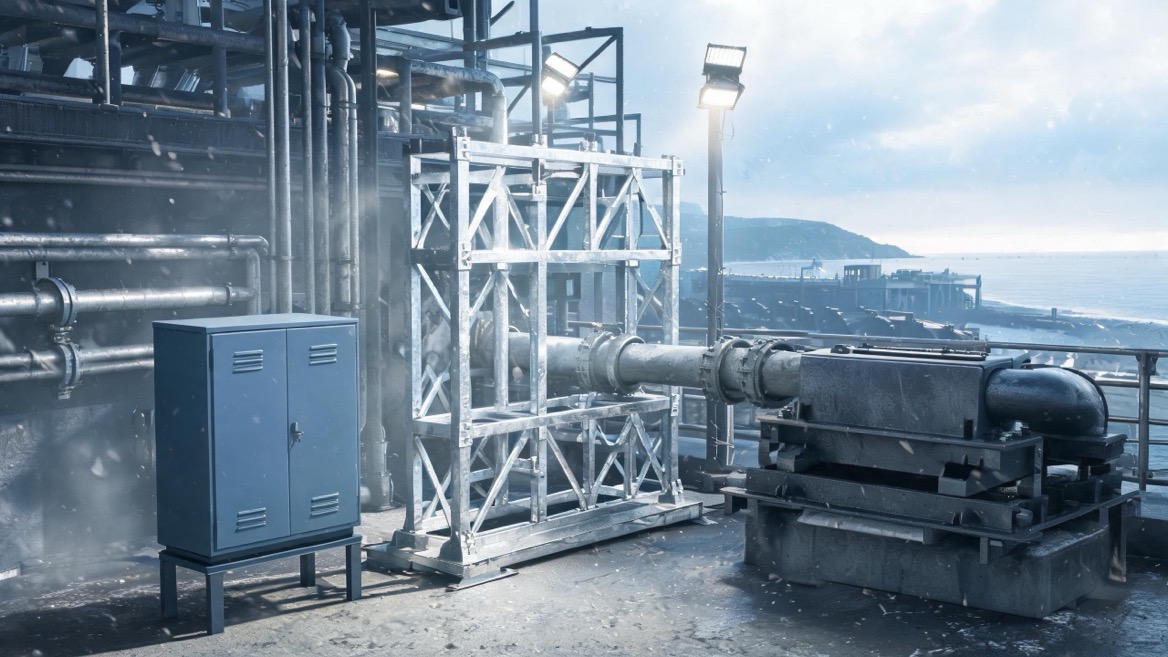
For an outdoor electrical enclosure used near a coastal industrial plant, a zinc-rich powder primer + polyester topcoat is often more appropriate than standalone hot-dip galvanizing. The powder system provides a controlled branded appearance, strong UV resistance, and compatibility with color-coded industrial equipment.
For a heavy steel support frame beneath the enclosure, hot-dip galvanizing may be more economical and durable. For highly exposed installations, a duplex system can provide the strongest balance of structural protection and visual performance.
This illustrates an important principle: one project may need more than one corrosion-protection strategy.
Choose zinc-rich powder primer + polyester when your product needs high corrosion resistance, stable exterior appearance, controlled color, and a smooth commercial finish. It is particularly suitable for equipment, enclosures, profiles, hardware, doors, windows, and manufactured components where visual quality supports product value.
Choose hot-dip galvanizing when you need robust zinc protection for heavy fabricated steel, large structures, internal cavities, and difficult-to-maintain outdoor assets.
Choose a duplex system when the project operates in exceptionally aggressive C5 conditions and demands both long-term protection and a premium colored finish.
Yinda Technology can help you evaluate substrate type, exposure conditions, coating structure, color requirements, target film thickness, and application process. Contact our technical team to develop a zinc-rich powder primer and polyester coating solution tailored to your C4-C5 industrial environment.
A polyester powder coating can provide good exterior durability, but a standalone polyester layer may not provide enough corrosion protection for severe C5 exposure. A zinc-rich primer or another qualified anticorrosion primer is commonly recommended beneath the polyester topcoat.
Neither is universally better. Zinc-rich powder primer plus polyester is usually better for color, appearance, controlled coating build, and manufactured products. Hot-dip galvanizing is often better for heavy structural steel and hard-to-access surfaces.
The appropriate thickness depends on the exposure level, substrate, pretreatment, coating formulation, and project specification. The primer and topcoat should be specified as a complete system, with thickness targets verified through production quality control.
Yes. This is known as a duplex system. Proper cleaning and surface preparation are essential because galvanized surfaces can contain residues, oxides, passivation layers, or surface features that influence adhesion.
No coating prevents corrosion forever. Galvanized zinc gradually consumes over time, especially in aggressive industrial or marine conditions. Service life depends strongly on coating thickness, environmental severity, water retention, pollutants, mechanical damage, and maintenance conditions.
Edges usually have lower effective coating thickness and are more vulnerable to handling damage. Sharp edges should be rounded, cleaned, and coated with sufficient film build to reduce early edge corrosion.
In many factory-applied applications, yes. Powder systems can offer low-waste application, consistent film build, efficient recovery, and compatibility with automated coating lines. Final selection should still be based on the complete corrosion-protection specification and the part's service environment.
1. [ISO 12944 protective coating system guidance for C4 and C5 corrosivity categories]
2. [ASTM A123/A123M overview for hot-dip galvanized steel products]
3. [ASTM A123/A123M standard document for zinc coatings on iron and steel products]
4. [Research on zinc-rich polyester powder coatings with iron phosphide]
5. [Study of powder-coating primer and topcoat performance in corrosion exposure]
6. [Technical data on zinc-rich powder primer corrosion resistance]
7. [Hot-dip galvanizing material categories and coating-thickness guidance]


