Language


Views: 263 Author: Yinda Powder Coating Publish Time: 2026-09-27 Origin: Site


Content Menu
● What Is Automotive Powder Coating?
● Which Vehicle Parts Use Powder Coating?
>> Wheels, Trim and Visible Parts
>> Springs and Road-Exposed Hardware
● What Benefits Can Powder Coating Offer?
● How Do You Choose the Right Powder?
>> Match Chemistry to Exposure
>> Check Substrate and Geometry
● How Should an Automotive Coating Line Be Validated?
● What Should Buyers Ask Suppliers to Prove?
● When Might Powder Coating Be the Wrong Fit?
● A Manufacturer's View of Better Specifications
● Plan Your Next Coating Trial
>> Is automotive powder coating always better than liquid paint?
>> Can powder coating be applied to every car part?
>> Does a thicker coating always prevent corrosion?
>> Can a standard powder coat electrically insulate an EV battery part?
>> How can we tell whether the powder has fully cured?
>> Is recovered overspray always reusable?
>> What should we send when requesting a coating recommendation?
Automotive powder coating can protect metal vehicle parts while giving them a durable, consistent finish. It is used for components such as wheels, brackets, springs, trim and selected electric vehicle (EV) battery parts. But a good result depends on more than choosing a color. Substrate preparation, coating chemistry, part geometry and curing conditions all determine whether a finish will meet its intended service requirements.
For an automotive manufacturer, the useful question is not "Is powder coating better than paint?" It is: Which coating system will meet this part's requirements on our production line? This guide explains where powder coating fits, where it may not, and what to check before approving a supplier.
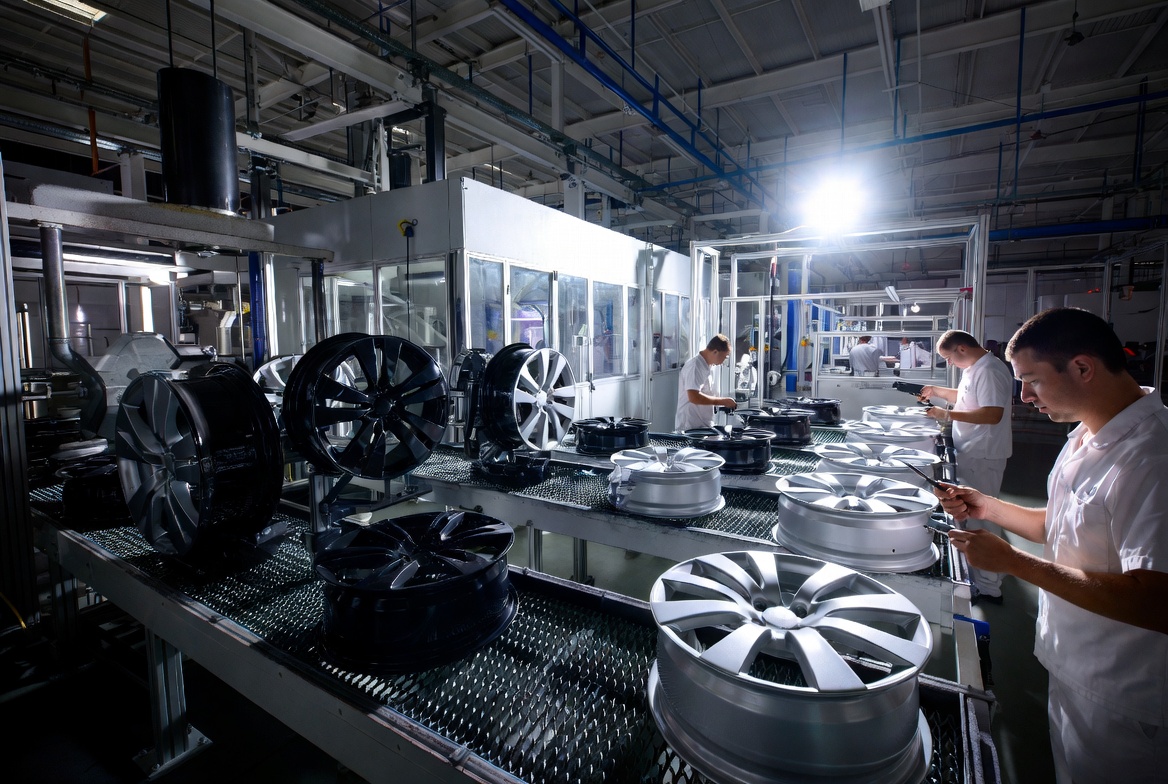
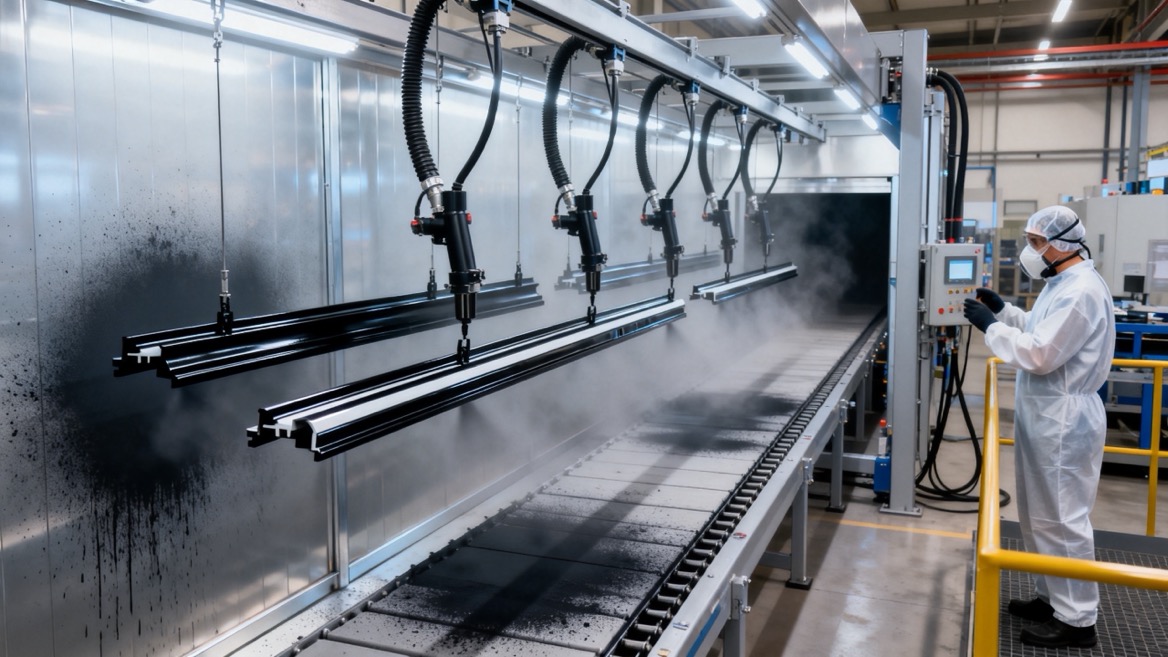
Powder coating is a finishing process that deposits dry coating particles onto a prepared surface. In a common method, an electrostatic spray gun charges the particles, which are attracted to a grounded metal part. Heating then forms the finished coating.
The process avoids the liquid carrier used in many conventional paints. That can reduce solvent-related emissions during application. Recoverable overspray may also improve material use. Neither benefit is automatic: results depend on the formulation, equipment, reclaim controls and the wider finishing process.
For automotive work, the coating is only one part of the system. Cleaning, pretreatment, application and cure must work together. A suitable powder applied over contamination or cured incorrectly can still fail.
Powder coatings serve both decorative and protective purposes. The required properties vary considerably between a visible wheel and a bracket hidden beneath a vehicle.
| Component | Main coating priorities | Questions to settle before selection |
|---|---|---|
| Wheels and visible trim | Appearance, weatherability, cleaning resistance | What color, gloss and exposure performance must be maintained? |
| Springs and suspension parts | Corrosion protection, impact resistance, flexibility | Will the coating tolerate movement and road-debris impacts? |
| Brackets, frames and hardware | Coverage, adhesion, production consistency | Are edges, holes and mating surfaces accessible and correctly masked? |
| Underbody parts | Corrosion and chip resistance | What pretreatment and damage criteria apply? |
| EV battery components | Application-specific corrosion or electrical protection | Is dielectric performance required, and how will it be validated? |
This table is a starting point, not a substitute for a part drawing or approval specification. For example, a battery enclosure may need corrosion protection, while a bus bar may need a coating engineered and tested for electrical insulation. Those are different assignments.
Visible parts need more than a pleasing finish when they leave the coating line. They may face sunlight, washing chemicals, moisture and handling damage. An exterior-grade formulation should be selected against the actual exposure and appearance requirements.
A frequent mistake is specifying "automotive powder" without defining acceptable color change, gloss retention or surface defects. Buyers should agree on approved samples, viewing conditions and inspection criteria before full production.
Springs, brackets and similar parts encounter different stresses. Road salt, grit and movement can make adhesion, flexibility and impact performance more important than decorative appearance.
Film build alone does not guarantee protection. Sharp edges, welds and difficult recesses need inspection because inadequate coverage can create vulnerable areas. If a part moves or flexes in service, the supplier should evaluate the coating on representative components, not just flat test panels.
EV programs have widened the range of coating questions. Some components need corrosion and impact protection; others require dielectric insulation. Coatings used near battery systems must be matched to the component's electrical, thermal, dimensional and assembly requirements.
Do not assume that an ordinary decorative powder is an electrical safety coating. Where insulation is specified, agree on the required electrical tests, coverage of edges and bends, and acceptance limits with the OEM or component designer. Validate the complete coated part after relevant forming or assembly steps.
The strongest business case connects a coating benefit to a measurable requirement. Powder coating may offer the following advantages when the chemistry and process are appropriate:
- Protective performance: A correctly prepared and cured system can provide useful corrosion, chemical, impact or abrasion resistance.
- Finish consistency: Controlled application can deliver a repeatable color and texture across production batches.
- Lower solvent use: Powder formulations generally avoid the solvents used as carriers in conventional solvent-borne coatings.
- Material recovery: Suitable overspray can sometimes be collected and reused under controlled conditions.
- Production fit: Automated application can suit repeatable metal components when racking, grounding and oven capacity are designed around the parts.
Avoid converting these possibilities into universal claims. Powder does not always outperform a well-designed liquid coating. A complex recess may be harder—not easier—to coat because electrostatic attraction favors accessible surfaces. Reclaimed powder also needs management; uncontrolled reuse can alter application behavior or appearance.
For procurement teams, the practical comparison is the cost and performance of the finished system, including pretreatment, rejects, energy, labor and rework—not the price of powder per kilogram alone.
Start with the part's working environment and failure risks. Then choose a formulation and process capable of meeting them.
A powder that works well indoors may be a poor choice for exterior trim. Epoxy-containing systems can offer useful protective properties but are generally not the first choice when long-term outdoor appearance is essential. Polyester and some other exterior-oriented chemistries are used where weatherability matters.
For a spring or underbody bracket, ask about flexibility, chip resistance and the intended corrosion system. For a visible wheel, prioritize the specified appearance and outdoor performance. For an EV electrical component, request a product intended for the particular insulation duty rather than relying on a generic resin label.
The resin family narrows the options; testing the finished part makes the decision.
Confirm whether the part is steel, aluminum or another material, and document its incoming condition. Oils, oxidation and fabrication residues affect cleaning and pretreatment.
Next, examine holes, deep channels, tight corners, welds and threaded areas. Electrostatic powder can be difficult to deposit inside recessed "Faraday" areas. Masked contact points and mounting faces also need to be identified early. A coating plan developed from a flat sample may overlook the feature most likely to fail on the real part.
The oven setting is not the same as the temperature reached by the metal. A heavy casting and a thin bracket can heat at different rates, even on the same conveyor.
Request the powder's specified metal-temperature and time requirements. During a production trial, measure a representative part's temperature through the oven and confirm that it stays within the approved cure window. This is especially important when a line runs parts with different masses or has limited dwell time.
A disciplined trial can reveal problems before they become recurring rejects. For a new automotive powder coating program, use this sequence:
1. Define the requirement. Record the substrate, component geometry, environment, appearance target, expected production volume and applicable customer specification.
2. Prepare representative parts. Include difficult edges, recesses, welds and the heaviest component. Confirm that cleaning and pretreatment suit the incoming metal and soils.
3. Run a controlled application trial. Document gun settings, grounding, rack positions, masking, target film-thickness range and any reclaim conditions.
4. Verify cure on the part. Measure the metal's time-temperature history rather than relying only on the oven display.
5. Inspect and test. Check visual appearance, thickness, adhesion and the application-specific performance required by the buyer.
6. Record the approved process. Keep the formulation, pretreatment, line settings, inspection plan and change-control responsibilities together.
This process is particularly valuable when transferring a coating between plants. Identical powder does not ensure identical results if the washer, racks, oven or inspection method changes.
A useful supplier discussion moves quickly from broad claims to evidence. Ask for documentation that corresponds to the component and its service conditions.
| Requirement | Practical evidence to request |
|---|---|
| Coating thickness | An agreed minimum and maximum, plus measurements at critical locations |
| Adhesion | Results using the method specified for the coating system and film thickness |
| Corrosion resistance | Test conditions, specimen preparation and agreed failure criteria |
| Appearance | Approved color and gloss samples, viewing conditions and defect limits |
| Cure | A documented time-temperature profile from a representative part |
| Process repeatability | Batch controls, records and a procedure for formulation or line changes |
Test names alone are not acceptance criteria. ASTM D7091 addresses dry-film thickness measurement. ASTM D3359 provides tape-test methods for rating adhesion, with method selection affected by film thickness. ASTM B117 defines a salt-spray environment, but it does not prescribe a universal exposure duration or predict real-world service life on its own.
Before approving a claim such as "passes salt spray," ask: *On which substrate and pretreatment? For how long? What counted as failure? Was the specimen flat or an actual part?* The answers make a test result useful.
Powder is not the right answer for every automotive surface. Oven-cure requirements can restrict temperature-sensitive assemblies or substrates. Complex recesses may need process changes or a different coating method. Very tight fit tolerances can make film build difficult to accommodate.
Color and appearance goals also matter. A vehicle program with an established multi-layer liquid finish should not assume a powder can replace it without appearance and process validation. Conversely, a component already suited to electrostatic application may be an attractive candidate for a carefully planned trial.
The best decision compares feasible coating systems against the same specification. Include capital needs, throughput, energy use, waste handling, rework and field-performance expectations. If one system misses a mandatory requirement, a lower quoted material cost will not rescue it.
At Yinda Technology, we approach automotive powder selection as a component-and-process decision, not a catalog-color decision. Our work in powder coatings and environmentally oriented materials includes applications for new-energy vehicles, architectural products, hardware and electrical equipment.
For a cross-region program, consistency begins with a shared specification. A buyer sourcing components across China, Indonesia and Saudi Arabia should define the same substrate condition, pretreatment expectation, approved sample, critical measurement locations and acceptance criteria for each production site. Local process settings may differ; the required result should not become ambiguous.
We would ask for the part drawing and its most challenging features before recommending a trial. That discussion can expose an insulation requirement, a hidden contact surface or an oven limitation early enough to address it. A credible recommendation states what still needs testing. It does not promise corrosion-free performance without knowing the part or its environment.
The most reliable automotive powder coating program begins with a clear specification and ends with evidence from representative parts. Send Yinda Technology your component drawing, target performance requirements and production-line conditions to discuss a suitable formulation and a practical trial plan. That gives your team a firmer basis for approving the finish before scaling production.

No. Either system can perform well when it is properly specified and applied. Compare them against the same part requirements, including appearance, corrosion protection, geometry, cure constraints, production cost and repair needs.
No. Many metal components are candidates, but suitability depends on substrate, heat tolerance, part geometry and the required finish. Assemblies containing temperature-sensitive materials need special evaluation before oven curing.
No. Excessive or uneven film build can create other problems, while poor cleaning, inadequate pretreatment and missed edges can undermine protection. Specify a tested film-thickness range and inspect critical locations.
Do not assume so. If the coating has a safety-related dielectric function, select a formulation for that duty and validate it against the component's electrical and coverage requirements.
Check the manufacturer's specified metal-temperature and time requirements, then measure a representative part during the oven cycle. An oven setpoint by itself cannot confirm that the entire part received the required cure.
Not necessarily. Reuse depends on the powder, recovery equipment, contamination control and the finish requirements. Establish a documented reclaim procedure and confirm that reused material still produces acceptable results.
Provide the part drawing, substrate, annual volume, intended environment, appearance requirements, pretreatment details, oven capability and applicable test specification. Photos of edges, welds and recesses can help identify application risks.
1. [Precision Coating Technology — "Automotive Powder Coating Provides Enhanced Vehicle Protection and Beauty"]. Original article used to identify the existing scope, claims and content gaps. [precisioncoatingtech]
2. [Powder Coating Institute — "Frequently Asked Questions"]. Technical guidance on cleaning, pretreatment, recessed-area coverage, coating selection and metal-temperature cure. [powdercoating]
3. [Powder Coating Institute — "Environmental Impact"]. Industry explanation of solvent use, volatile organic compound emissions and overspray recovery. [powdercoating]
4. [PPG — "Electric Vehicles"]. Examples of distinct coating functions for EV battery components, including dielectric and corrosion protection. [ppg]
5. [Axalta — "Automotive Coatings"]. Automotive component examples and application-specific performance requirements. [axalta]
6. [ASTM International — ASTM D7091-22]. Standard practice for nondestructive dry-film thickness measurement on specified metal substrates. [store.astm]
7. [ASTM International — ASTM D3359-23]. Tape-test methods for rating coating adhesion, including method limitations related to film thickness. [store.astm]
8. [ASTM International — ASTM B117]. Salt-spray apparatus practice and cautions about interpreting results as predictions of natural-environment performance. [store.astm]
9. [Yinda Technology — "About Us"]. Company description, product applications and regional presence; the article does not assert unverified customer approvals or project outcomes. [yinda-global]


