Language


Views: 268 Author: Yinda Powder Coating Publish Time: 2026-07-03 Origin: Site


Content Menu
● Introduction: Why This Comparison Matters for Heat-Sensitive Aluminum
● Understanding Standard Powder Coating Powder
>> What Is Standard Powder Coating Powder?
>> Typical Cure Windows and Process Conditions
>> Strengths of Standard Powder Coatings
● What Makes Low-Temperature Cure Powder Coatings Different?
>> Defining Low-Temperature Cure for Heat-Sensitive Aluminum
>> The Material Science Behind Low-Temperature Cure
>> Energy, Sustainability and Process Efficiency
● Direct Comparison: Low-Temperature Cure vs. Standard Powder Coating Powder
>> Performance Comparison for Heat-Sensitive Aluminum Alloys
>> UX-Focused Decision Checklist for Coating Engineers
● Practical Industry Case Insight: Architectural Aluminum and NEV Components
>> Architectural Aluminum Profiles and Window Systems
>> Heat-Sensitive EV and Medical Aluminum Components
● Expert-Level Implementation Guidance for Low-Temperature Cure Lines
>> Step-by-Step Transition Strategy
● Strategic Perspective: When to Choose Which System
>> Situations Favoring Low-Temperature Cure Powders
>> Situations Where Standard Powder Still Makes Sense
● Yinda Technology's Expert View on Future Trends
● Conclusion and CTA: Optimize Your Coating Strategy for Heat-Sensitive Aluminum
● FAQ
Low-temperature cure powder coatings provide a critical solution for heat-sensitive aluminum alloys, while standard powder coating powders still dominate high-throughput, high-temperature lines in architectural and general industrial applications. Choosing between them is no longer just a technical decision; it is a strategic choice affecting energy use, sustainability, product performance and total cost of ownership across modern global manufacturing. [m.ibuychem]
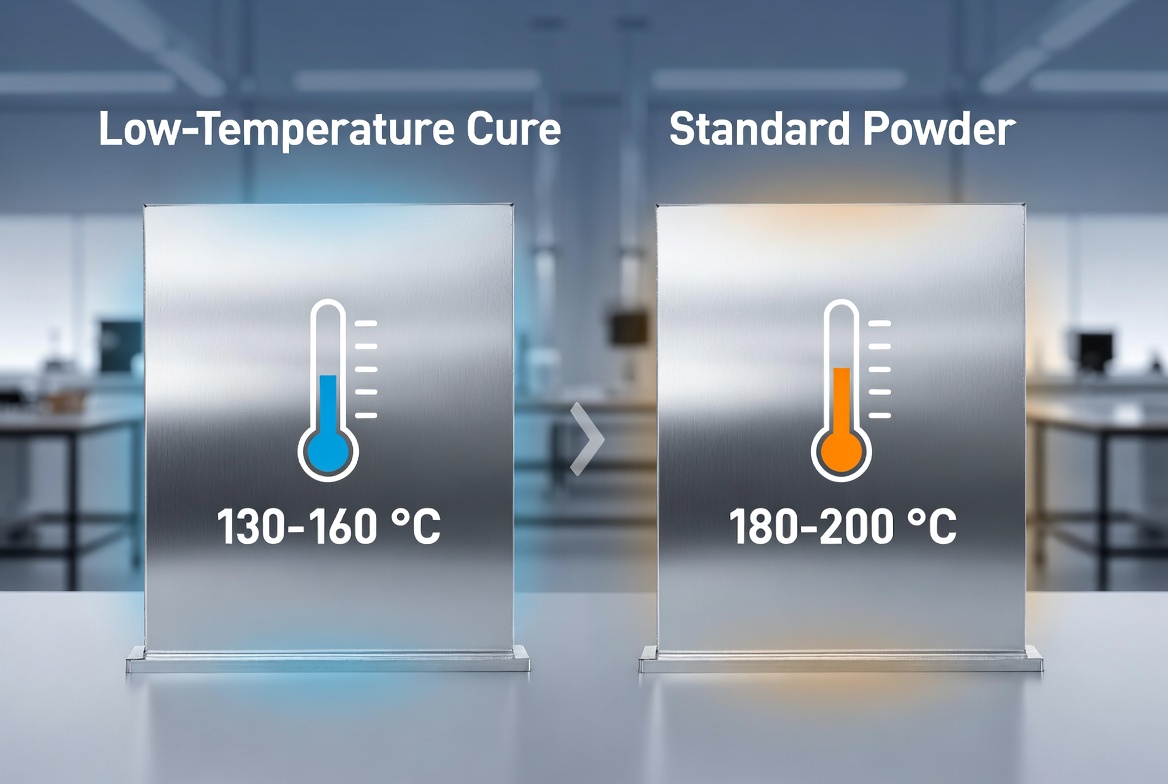
In many aluminum applications—architectural profiles, window frames, EV battery housings, medical devices and precision hardware—substrate temperature limits are tightening while performance expectations rise. Traditional powder coatings that cure at 180–200°C for 10–15 minutes can introduce distortion, discoloration, or microstructural changes in heat-sensitive aluminum alloys. [ibuychem]
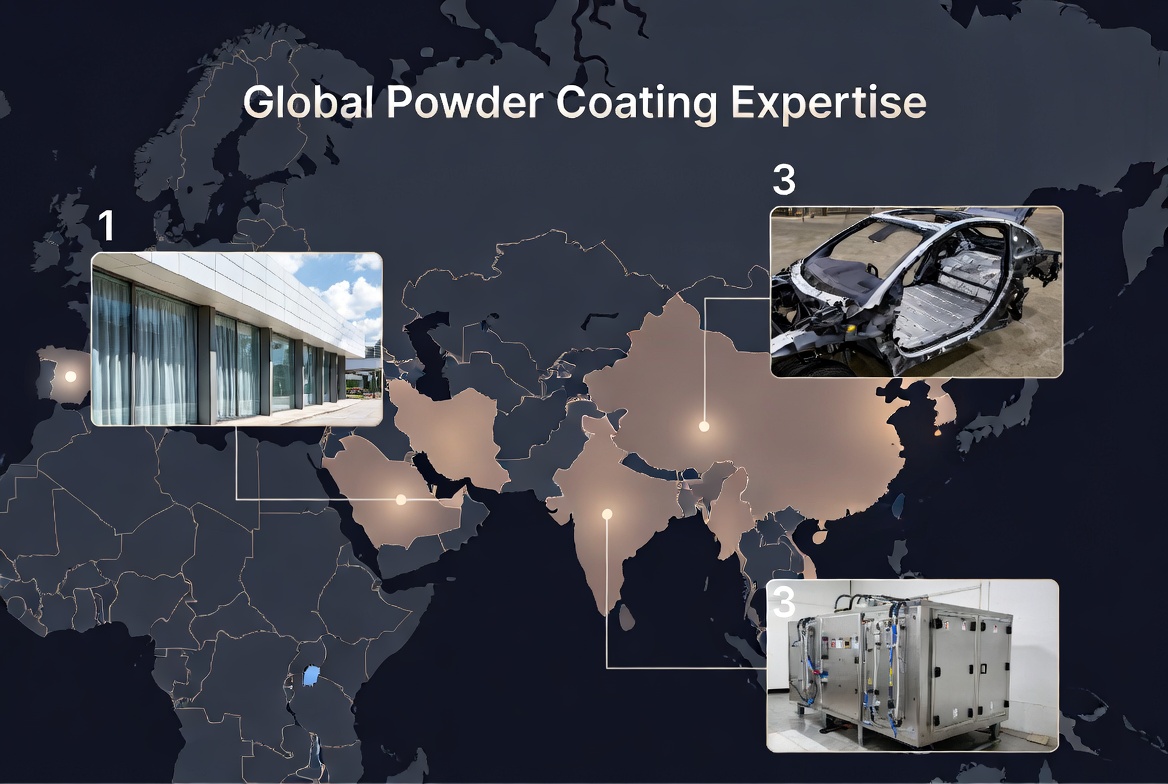
Low-temperature cure powder coatings have emerged to bridge this gap, enabling curing at 130–160°C and shorter oven cycles while maintaining mechanical and corrosion resistance. As a manufacturer operating in China, Indonesia and Saudi Arabia, Yinda Technology is seeing this shift directly in customer requirements for building profiles, doors and windows, NEV parts, medical equipment and electrical housings. [made-in-china]
Standard powder coating powders are thermoset systems—typically polyester, epoxy, or polyester-epoxy hybrids—engineered to cure at conventional oven temperatures around 180–200°C. At these temperatures, the resin crosslinks, forming a tough, chemically resistant, and aesthetically stable film on aluminum and other substrates. [solutions.covestro]
For architectural aluminum profiles and industrial components, these standard systems have become the benchmark for gloss retention, UV durability, and long-term corrosion protection. [ibuychem]
Standard architectural-grade powders often specify cure conditions such as:
- 180–190°C metal temperature
- 10–15 minutes cure time in the oven
- Line speeds optimized around these parameters for maximum throughput [ztuzx]
These conditions assume that the aluminum alloy and part geometry can tolerate elevated temperatures without distortion or changes in mechanical properties. While this is acceptable for many extruded profiles and heavy-gauge components, it is problematic for thin-walled, complex or highly heat-sensitive aluminum assemblies. [sohu]
Standard powders still offer several compelling advantages:
- Mature technology with well-understood performance in architectural and industrial standards. [solutions.covestro]
- Broad color and texture availability (smooth, matte, metallic, textured). [ibuychem]
- Optimized cost structure and high global availability, especially for large-volume projects. [solutions.covestro]
- Proven outdoor durability when using high-quality polyester systems for building aluminum. [ibuychem]
For large façade projects, doors and windows, and robust hardware, standard cure powders remain the default choice when substrate heat tolerance is high and energy costs are manageable. [m.ibuychem]
Low-temperature cure powder coatings are engineered to achieve full film properties at significantly lower oven temperatures and often shorter cure times. Typical cure windows include: [chinapowdercoating]
- 130–160°C metal temperature
- 8–12 minutes curing, sometimes less with optimized formulations
- In advanced systems, curing down to around 130–150°C is possible without sacrificing film integrity. [ztuzx]
For heat-sensitive aluminum alloys, this lower thermal load directly reduces the risk of warping, microstructural changes and cosmetic defects such as yellowing or gloss variation. [sohu]
From an industry expert perspective, the key enablers of low-temperature cure technology include:
- High-reactivity polyester or hybrid resins with tailored acid values and molecular weights. [allnex]
- Optimized curing agents and catalysts that promote crosslinking at reduced temperatures. [patents.google]
- Controlled particle size distribution and grinding processes to balance flow, reactivity and storage stability. [chinapowdercoating]
These formulations must simultaneously maintain:
- Storage stability at typical warehouse temperatures
- Adequate pot life and transfer efficiency in the booth
- Final film properties such as hardness, flexibility, impact resistance and corrosion performance comparable to standard systems. [patents.google]
Leading case studies on low-temperature cure powders in architectural aluminum show notable energy and carbon savings when compared to conventional systems. Lower oven set points and shorter cure cycles translate into: [m.ibuychem]
- Reduced gas or electricity consumption per square meter of coated surface. [chinapowdercoating]
- Lower peak temperature stress on ovens and conveyors, extending equipment life. [m.ibuychem]
- Potential for higher line speeds or increased daily output when cure time is shortened. [chinapowdercoating]
For manufacturers operating across diverse climates—such as Yinda Technology's operations in China, Indonesia and Saudi Arabia—the energy-saving aspect becomes especially important where local energy prices and sustainability regulations are evolving. [made-in-china]
Below is a practical expert-level comparison focused on heat-sensitive aluminum:
| Aspect | Low-Temperature Cure Powder | Standard Powder Coating Powder |
|---|---|---|
| Typical cure temp | 130–160°C metal temperature (m.ibuychem) | 180–200°C metal temperature (m.ibuychem) |
| Cure time | 8–12 min, sometimes shorter (m.ibuychem) | 10–15 min standard architectural cycle (m.ibuychem) |
| Substrate stress | Lower thermal stress, ideal for heat-sensitive alloys and thin sections (m.ibuychem) | Higher thermal load, best for robust profiles and heavy parts (m.ibuychem) |
| Energy use | Reduced oven energy consumption per cycle (m.ibuychem) | Higher energy demand at standard temperatures (m.ibuychem) |
| Typical applications | MDF and heat-sensitive substrates, complex aluminum assemblies, lightweight EV components (patents.google) | Architectural aluminum profiles, conventional doors and windows, general hardware and electrical enclosures (ibuychem) |
| Cost structure | Often slightly higher formulation cost, offset by process savings (m.ibuychem) | Lower initial material cost, optimized for high-volume lines (ibuychem) |
For heat-sensitive aluminum alloys, the balance usually tips toward low-temperature cure powders once you factor in reduced rework, lower rejection rates and minimized dimensional changes. [ztuzx]
From a user experience standpoint on the shop floor, coating engineers can use this simple checklist:
1. Confirm substrate limits: What is the maximum safe metal temperature for the aluminum alloy and assembly?
2. Measure distortion risk: Do thin walls, complex extrusions or integrated components show distortion at standard cure conditions?
3. Assess energy constraints: Are energy costs and sustainability KPIs pushing you toward lower oven temperatures?
4. Evaluate line configuration: Can existing ovens reliably control lower set points and uniform temperature distribution?
5. Calculate total cost: Compare material price, energy cost, rework, warranty risk and equipment life, not just powder price.
If your answer is "yes" to substrate sensitivity, sustainability pressure and visible distortion risk, low-temperature cure powder coatings are usually the more strategic choice. [ztuzx]
In architectural aluminum, new low-temperature cure systems designed for building profiles demonstrate that, with correct formulation, you can meet standard coating specifications while curing at significantly reduced temperatures. [ibuychem]
Industry reports on building profile projects show:
- Conversions from 200°C traditional curing to lower-temperature systems reduce energy consumption while maintaining film performance. [solutions.covestro]
- Reduced thermal stress on long, thin extrusions enhances line stability and cuts deformation-related rejects. [m.ibuychem]
For manufacturers supplying doors, windows and façade elements, this becomes an immediate competitive differentiator when bidding for green building and sustainability-focused projects. [solutions.covestro]
Heat-sensitive aluminum alloys are widely used in:
- EV battery enclosures and lightweight structural components.
- Medical equipment housings requiring dimensional stability and cleanability.
- Precision hardware and electrical parts with integrated seals or electronic elements. [sohu]
For these segments, adopting low-temperature cure powder coatings can:
- Prevent damage to internal electronics or pre-assembled components during curing. [sohu]
- Protect thin-walled structures from distortion that would compromise fit and function. [ztuzx]
- Support OEMs in meeting sustainability, energy-efficiency and product reliability targets simultaneously. [chinapowdercoating]
From a coating engineer's perspective, implementing low-temperature cure powders on a heat-sensitive aluminum line typically follows these steps:
1. Substrate audit
- Identify all aluminum alloy types and thickness ranges in current and planned production.
- Define maximum safe metal temperature for each category.
2. Oven profiling
- Run detailed temperature profiles across your existing oven at various set points.
- Verify uniformity of metal temperature across part geometry and conveyor length.
3. Sample testing with low-temperature powders
- Coat representative parts using low-temperature cure formulations matched to your performance needs.
- Evaluate film appearance, hardness, flexibility, impact resistance and corrosion behavior against internal standards.
4. Energy and throughput simulation
- Model energy consumption at lower set points and adjusted line speeds.
- Compare total operating cost with your standard powder setup.
5. Full-scale validation and training
- Conduct pilot production runs with customer-approved parts.
- Train operators on new cure windows, visual inspection criteria and rework procedures.
This structured approach minimizes risk and helps teams quantify both technical and economic benefits before fully switching critical heat-sensitive aluminum products to low-temperature cure systems. [m.ibuychem]
Opt for low-temperature cure powder coatings when:
- Your aluminum alloys or assemblies have strict maximum temperature limits.
- You see recurring distortion, discoloration or seal damage at standard cure temperatures.
- Sustainability targets, energy cost pressure or regulatory requirements drive oven temperature reduction.
- You want to expand into new markets such as EV components, medical devices or high-value heat-sensitive hardware.
Continue with standard powder coating powders when:
- Substrates are robust and fully tolerant of conventional cure temperatures.
- Existing lines are optimized for high throughput at 180–200°C and capital changes are not planned.
- Projects prioritize lowest material cost and conventional performance over energy savings.
- You already meet architectural and industrial specifications with stable defect rates and warranty performance.
In practice, many manufacturers deploy a hybrid strategy, using low-temperature cure powders for heat-sensitive aluminum lines while maintaining standard powders for less-sensitive, high-volume products. [ibuychem]
As a powder coating and eco-materials manufacturer with operations in China, Indonesia and Saudi Arabia, Yinda Technology observes several clear trends across architectural, automotive and industrial customers: [yinda-global]
- Growing demand for low-temperature cure systems aligned with global energy-saving and carbon-reduction goals.
- Increasing use of heat-sensitive aluminum alloys and complex assemblies in NEV and medical sectors.
- Stronger preference for suppliers who can offer both conventional and advanced low-temperature technologies, allowing flexible line design and risk mitigation.
From both a materials and business strategy standpoint, low-temperature cure powder coatings for heat-sensitive aluminum alloys are shifting from niche solutions to core technologies in modern coating portfolios. [ztuzx]
For heat-sensitive aluminum alloys, low-temperature cure powder coatings unlock measurable energy savings, improved substrate protection and access to new markets, while standard powder coating powders remain essential for robust, high-throughput applications. The most resilient manufacturers will design coating strategies that leverage both technologies—assigning each to the substrates and projects where it creates the greatest technical and economic value. [solutions.covestro]
If you are evaluating how to upgrade your coating operations for heat-sensitive aluminum, consider collaborating with a specialist supplier like Yinda Technology to audit your substrates, profile your ovens and design tailored low-temperature cure solutions that fit your energy, performance and budget objectives. [yinda-global]
Q1: Can low-temperature cure powders match the durability of standard architectural powders on aluminum?
A1: With modern high-reactivity polyester and optimized curing systems, low-temperature cure powders can be formulated to meet typical architectural durability requirements while curing at reduced temperatures. [chinapowdercoating]
Q2: Will switching to low-temperature cure powders require new ovens?
A2: Many existing convection ovens can be used at lower set points, but detailed temperature profiling is essential to confirm uniform metal temperature and avoid under-curing or film defects. [m.ibuychem]
Q3: Are low-temperature cure powders only suitable for aluminum?
A3: No, they are also used on heat-sensitive substrates such as MDF and certain steel assemblies; however, their benefits are particularly evident for heat-sensitive aluminum alloys and complex extrusions. [patents.google]
Q4: How does low-temperature curing impact cycle time and line throughput?
A4: Lower cure temperatures often allow shorter cure times, enabling higher line speeds or increased daily output, provided that oven control and part loading are optimized for the new parameters. [solutions.covestro]
Q5: What is the main risk when adopting low-temperature cure powder coatings?
A5: The primary risk is under-curing if oven control and metal temperature monitoring are insufficient; rigorous profiling and process validation are required to ensure full crosslinking and film performance. [ztuzx]
1. Guangzhou Yinda Powder Coatings Co., Ltd. Company profile – Made-in-China. https://www.made-in-china.com/showroom/yinda-powdercoatings/
2. Yinda Powder Coating – Powder Coatings Vs Liquid Paint For Automotive Applications. https://www.yinda-global.com/powder-coatings-vs-liquid-paint-for-automotive-applications.html
3. IBuyChem – Architectural aluminum profile powder spraying energy-saving scheme: low temperature fast cure powder coatings. https://m.ibuychem.com/expert/article/2420189
4. IBuyChem – Environmentally friendly low-temperature fast cure powder coatings for architectural aluminum profiles. https://www.ibuychem.com/expert/article/2555703
5. ZTUZX – Interpretation of several concepts in low-temperature cure powder coating technology. https://www.ztuzx.com/?p=10245
6. Allnex – Powder coatings technology overview. https://solutions.covestro.com/zh/highlights/articles/theme/product-technology/powder-coatings
7. Google Patents – Multi-coat system and coating method for low-temperature fast cure powder coatings. https://patents.google.com/patent/CN110804377A/zh
8. China Powder Coating – The Hidden Science Behind Low-Temperature Cure Powder Coatings. https://www.chinapowdercoating.com/the-hidden-science-behind-low-temperature-cure-powder-coatings/


